
Last updated November 2, 2026
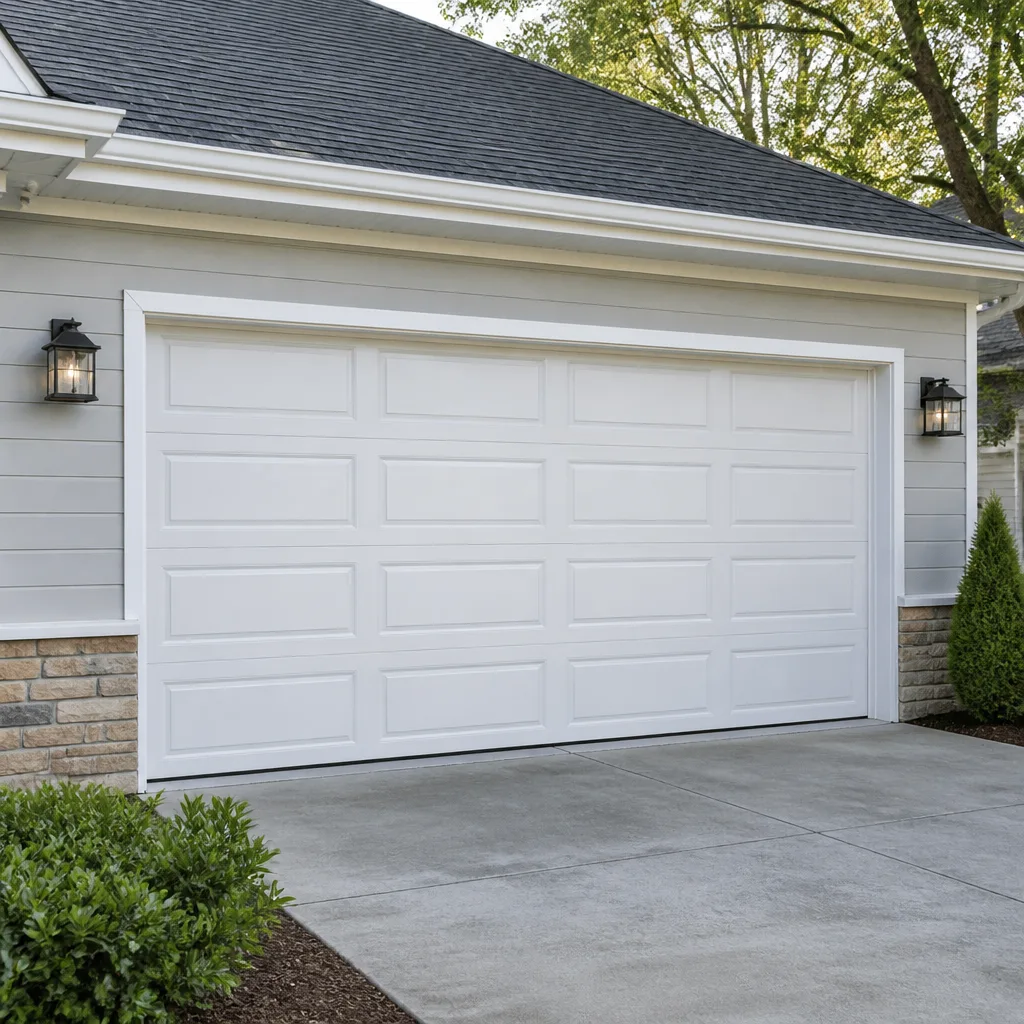 Raised-panel steel
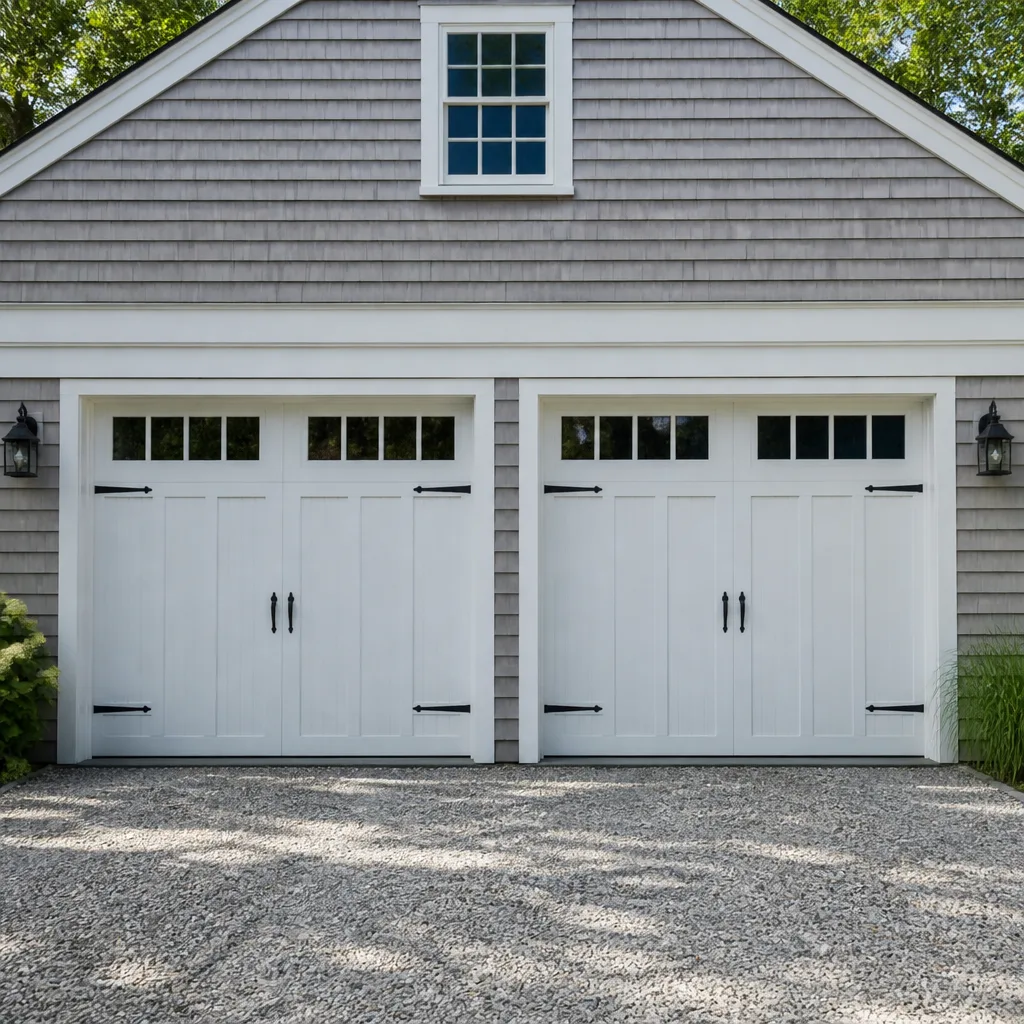 Carriage house
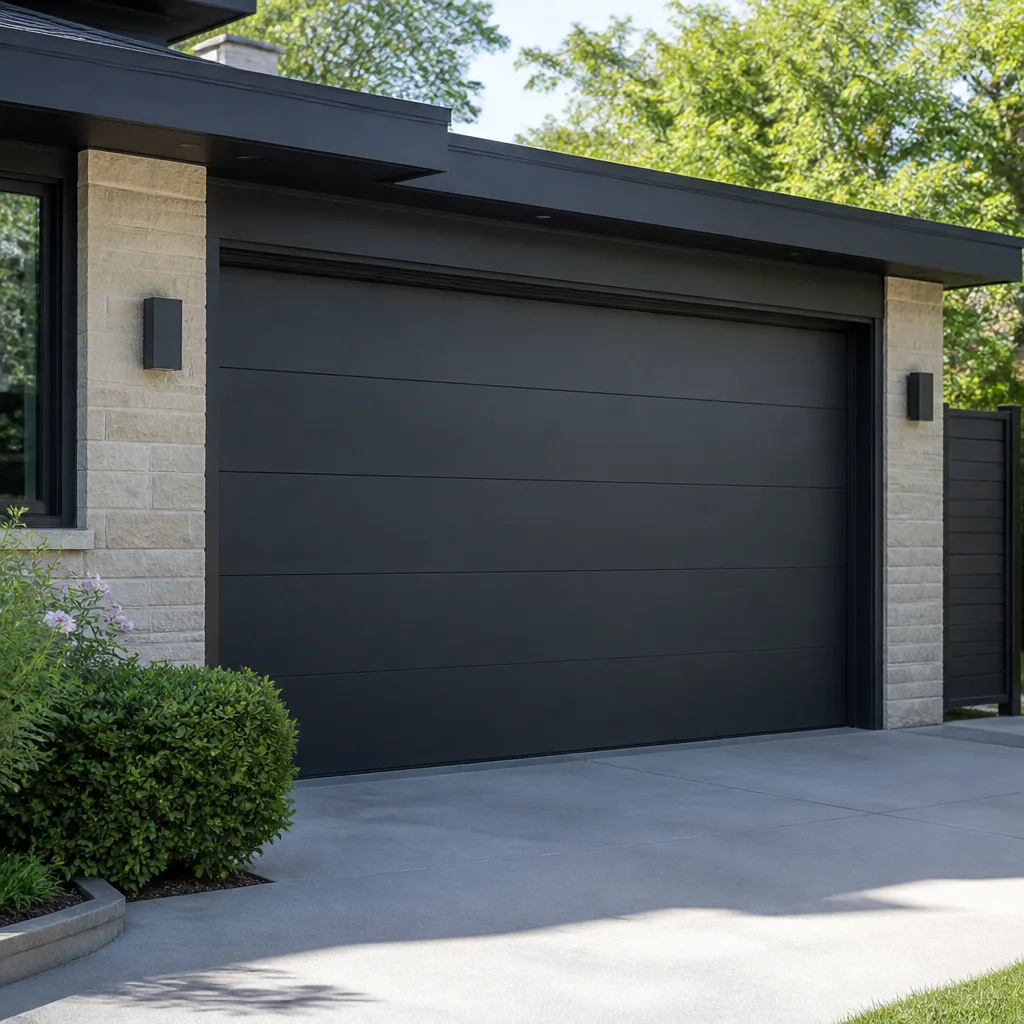 Modern flush
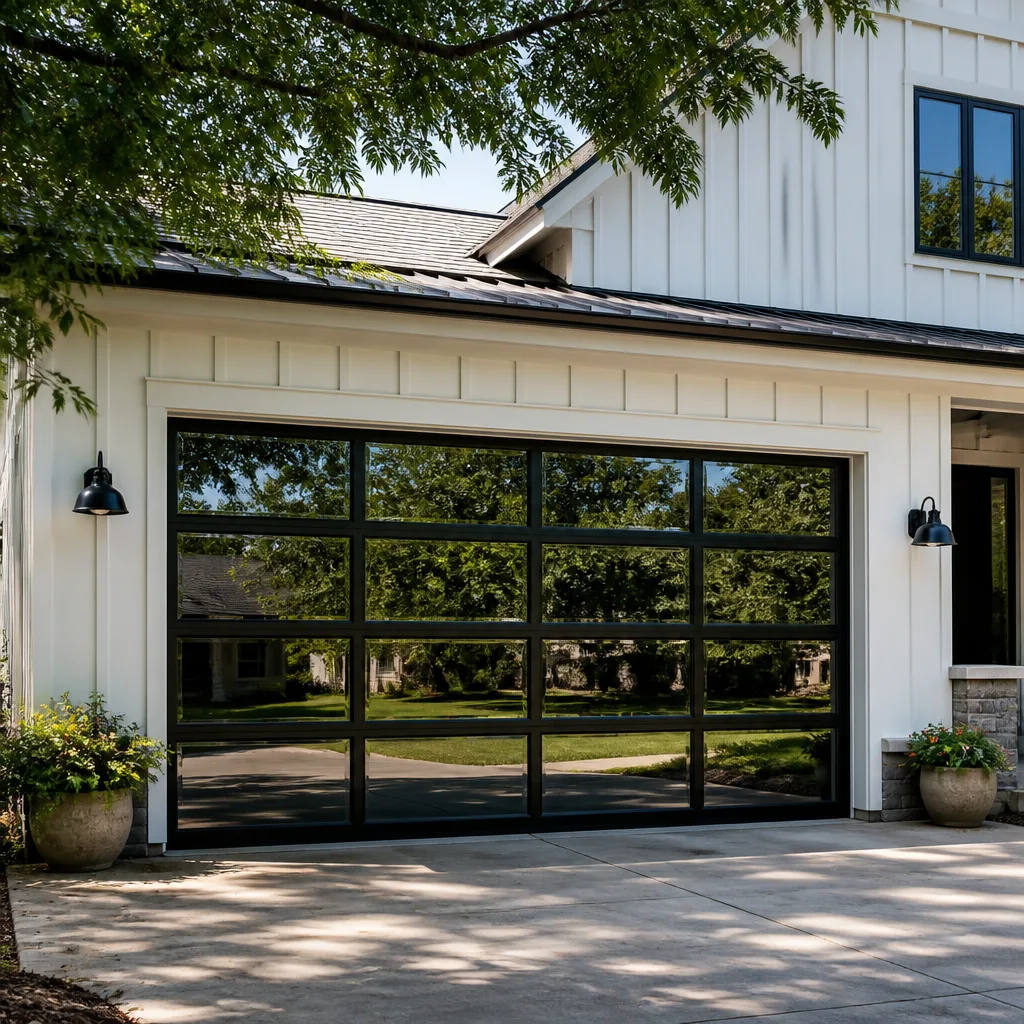 Full-view glass
 LiftMaster openers
 Chamberlain openers
Full 25-point door and opener safety check with every visit - springs, cables, rollers, tracks, and your LiftMaster or Chamberlain opener included
You get a price before we start. It does not change when the truck arrives.
Get your free estimateGarage Door Warning Signs: A Willow Glen Homeowner’s Reference Guide
Here’s something most Willow Glen homeowners don’t realize: a garage door that fails catastrophically almost always announces its intentions days or weeks in advance. The spring that snaps on a Tuesday morning was making a specific metallic sound for two weeks prior. The cable that frays and whips across the garage was showing visible rust and loose strands for a month. The opener that burns out its motor was laboring audibly through every cycle. This guide teaches you to read those signals early, before a stuck door blocks your car in the garage or a snapped spring sends you scrambling for emergency service in the middle of a workday.
Quick Answer
The most common garage door warning signs are: a door that slows down or speeds up unevenly, grinding or squealing sounds during operation, visible rust or fraying on springs and cables, a door that’s out of balance when manually lifted, and an opener that hesitates, reverses unexpectedly, or runs without moving the door. In Willow Glen, where homes date from the 1940s to current builds, the specific mix of older hardware and newer smart openers means different warning signs point to different fixes. If your door shows any of the red-flag indicators in this guide, stop using it and call a specialist before the symptom becomes a failure, or review our How to Hire a Garage Door Contractor in Willow Glen: A Step-by-Step Guide to know what to ask.
Styles & brands we work with
- Raised-panel steel
- Carriage house
- Modern flush
- Full-view glass
- LiftMaster openers
- Chamberlain openers
Table of Contents
- Sound-Based Diagnostics: What Your Door Is Telling You
- Visual Indicators on Springs, Cables, and Rollers
- The One-Hand Balance Test and How to Read It
- Opener Behavior Changes and What They Mean
- Watch-and-Monitor vs. Stop-Using-Today
- Willow Glen-Specific Factors That Accelerate Wear
- Common Mistakes to Avoid
- When to Call a Professional
Sound-Based Diagnostics: What Your Door Is Telling You
Garage doors are loud machines by nature, but specific sounds map to specific components. Learning the difference between “normal” and “warning” is the single highest-value diagnostic skill a Willow Glen homeowner can develop. Here’s what we listen for when we get a call about a noisy door, and what each sound means at the component level.
Grinding is a metal-on-metal sound, and it almost always points to rollers. Rollers have internal ball bearings, and when those bearings fail, the roller stops rolling and starts sliding along the track. Think of a skateboard wheel that’s seized up. The grinding you hear is the flat-spotted metal roller dragging along the steel track. On doors with nylon rollers, this sound often means the bearing has disintegrated entirely and the metal hub is now in direct contact with the track. Left unaddressed, a seized roller will wear a groove into the track itself, which doubles the repair cost.
Squealing is different from grinding. Squealing is high-pitched and tends to get worse in cold weather, which Willow Glen gets enough of in winter months to make this a seasonal complaint. Squealing normally points to one of two things: dry hinges or a lack of lubrication on the rollers and springs. The distinction matters because a hinge that squeals is a hinge wearing out, not just a hinge that needs oil. If you’ve lubricated the hinges and the squeal returns within a few weeks, the metal has probably deformed or the pin is worn, and the hinge needs replacing before it cracks.
Banging is the sound of sections slamming together. On a healthy door, each panel transitions smoothly along the curved track and the sections stay in alignment. A banging sound during opening or closing means the panels are separating or colliding, usually because a hinge is loose, a bracket has shifted, or the door is off balance and moving unevenly. In severe cases, banging is the sound of a cracked panel flexing under load. If you hear banging on a Wayne Dalton or Amarr door, the panel construction matters. Some models use bonded or injection-molded sections that can hide internal cracking until the panel gives way entirely.
Clicking is the most common sound we hear on older Craftsman openers in Willow Glen’s 1970s and 1980s tract homes. Clicking typically indicates a failing gear inside the opener’s drive assembly. These openers use a plastic gear that was designed to sacrifice itself rather than damage the motor, and after 15 or 20 years, the gear teeth shear off and the opener clicks rhythmically without moving the door. It’s a precise, repeatable click, not a random sound, and it means the opener needs a gear replacement or full unit replacement, not a new remote.
One caveat worth repeating: some sounds are harmless. A well-lubricated door is not silent. Chain-drive openers make a consistent mechanical rumble. Torsion springs make a soft creak when they’re settling. What you’re listening for is change. A sound that was always there, unchanged for years, is usually fine. A sound that appeared recently or has gotten louder is the warning.
Visual Indicators on Springs, Cables, and Rollers
Sound tells you something’s wrong. Visual inspection tells you what, specifically, and how urgent the fix is. You don’t need to open the opener cover or touch anything under tension. A flashlight and a careful look at the right components will reveal most problems before they become emergencies. Here’s what worn looks like versus failed, component by component.
Torsion Springs
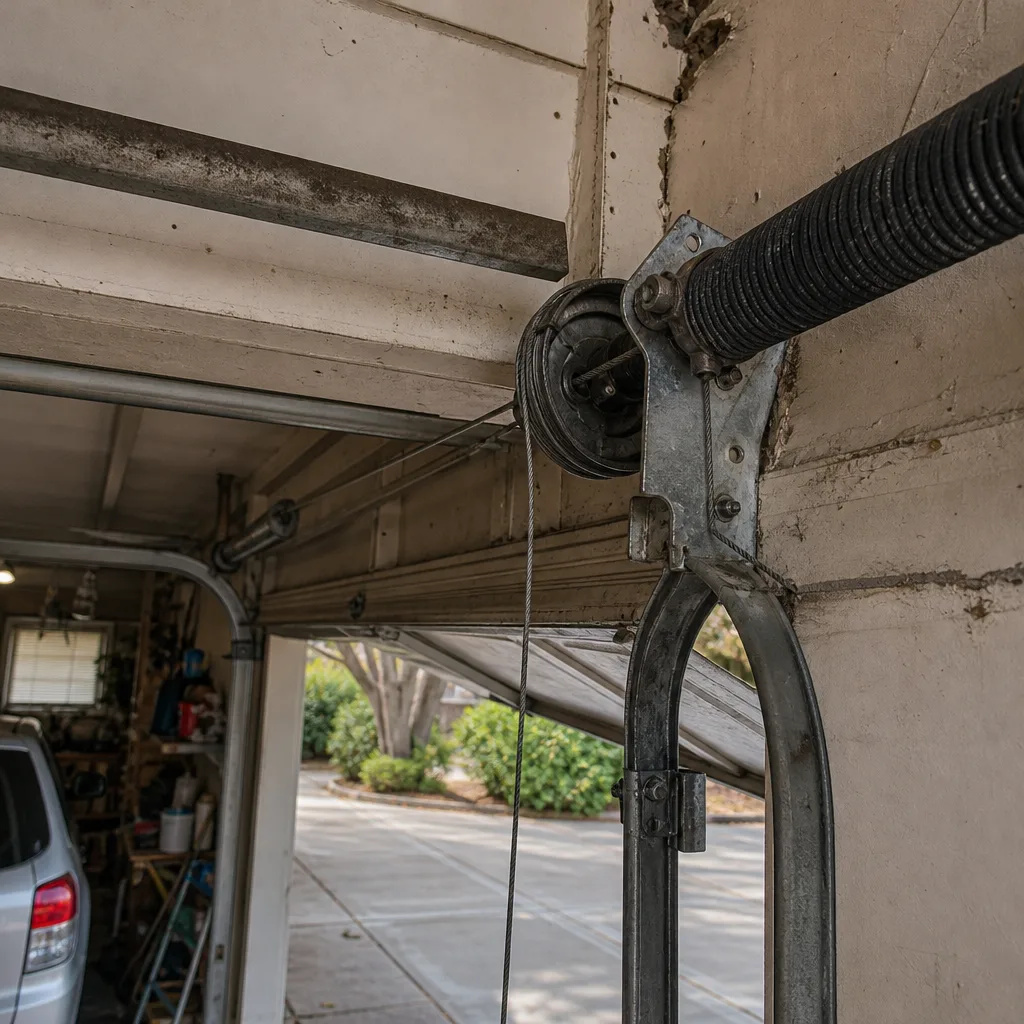
Torsion springs are mounted on a bar above the door opening. They do the heavy lifting, counterbalancing the weight of the door so the opener only has to provide a fraction of the force. A spring that’s near failure shows rust along its length, which concentrates stress and weakens the coil. Look for a gap in the coil. A torsion spring is one continuous piece of steel. When it snaps, you’ll see a visible separation, usually one to two inches, where the two halves have twisted apart. Before it snaps, the coils may show uneven spacing, meaning the metal has begun to fatigue. On a Raynor or Amarr door, spring failure is the most common reason for a door that won’t open at all.
Extension Springs
Extension springs run parallel to the horizontal tracks on both sides of the door. They stretch and contract rather than wind and unwind. Visual warning signs on extension springs include rust, stretched coils that no longer sit tight together, and visible cracks in the coils themselves. When an extension spring fails, it can release violently, which is why any extension spring system without a safety cable running through the spring is a serious hazard. If you see extension springs in your Willow Glen garage without a safety cable, that alone is a reason to have the system upgraded.
Cables
Cables work with the springs to lift the door. They run from the bottom brackets on each side of the door up to the drum at the top of the track. The warning sign that gets missed most often is fraying at the bottom bracket connection. That’s where the cable bends at the sharpest angle and carries the highest stress. Look for individual wire strands poking out, a fuzzy appearance instead of a tight braid, or rust at the crimp point. A frayed cable can snap under load, and a snapped cable on one side causes the door to bind and jam, sometimes falling partially off the track.
Rollers
Rollers do the quiet work. Nylon rollers show wear when the nylon wheel develops flat spots or chips. Steel rollers show rust and pitting. In both cases, look for wobble. A roller that spins freely but has lateral play means the bearing is failing. Rollers on residential doors last roughly 10,000 cycles, which for a typical Willow Glen household is 7 to 10 years. If your rollers predate your current opener, they’re probably due.
The One-Hand Balance Test and How to Read It
This is the single most useful test for a homeowner to perform, and it takes thirty seconds. The balance test tells you whether your springs are doing their job, and it gives you an early read on spring fatigue before the spring actually breaks. Here’s how to run it, and here’s how to interpret what you find.
- Close the door completely. The door should be in the fully down position, with the opener still engaged. Do not disconnect the opener yet.
- Pull the red release handle. This disconnects the door from the opener’s carriage, putting the door in manual mode. The handle hangs from a rope in the center of the rail. Pull it straight down and release.
- Lift the door by hand. Grab the door at the bottom center, not by the handle on the side, which can torque the sections. Lift smoothly upward to about waist height.
- Let go. Remove your hand completely. A healthy door, with properly matched springs, should stay in place at waist height, not drift up or down.
- Test at mid-height. Move the door to the halfway point and let go again. Same result: the door should hold. Then lower the door gently and re-engage the opener by pulling the release handle toward the opener until the carriage reconnects.
The interpretation is straightforward. If the door falls when you release it, the springs have lost tension and are not counterbalancing the door’s weight adequately. This means the opener is doing more than its share of the work, which will shorten the opener’s life and increase the load on the springs until one of them fails. Springs don’t regain tension over time. A door that fails the balance test is a door whose springs are already in decline. That’s the watch-and-act window, not a wait-and-see situation.
If the door flies up on its own when you release it, the springs are too strong for the door’s weight. That’s less common but not unheard of, usually after a previous owner or a fly-by-night repair swapped in the wrong-spec spring. A door that rises on its own will slam against the opener rail and can be dangerous to close manually.
We perform this test on every Garage Door Repair in Willow Glen service call, even when the stated problem is the opener. It’s the cleanest single signal of overall door health, and it costs nothing to check. In older Willow Glen neighborhoods like the streets around Booksin Elementary, where many homes still have their original 1980s door hardware, balance failures are a near-universal finding.
Opener Behavior Changes and What They Mean
Openers communicate through behavior. A change in how your opener cycles, hesitates, or reverses is a diagnostic signal, and mapping that signal to a root cause saves you from replacing the wrong component. Here are the behavior changes we hear about most on service calls in Willow Glen, and what each one actually means.
Hesitation before moving. The opener’s motor runs, but the door doesn’t move for a second or two, then lurches into motion. On chain-drive LiftMaster and Chamberlain units, this often means a loose chain or a worn sprocket on the top of the opener. The motor spins, the slack gets taken up, and only then does the door begin to travel. On belt-drive units, hesitation points to a slipping belt or a failing capacitor in the motor start circuit. The capacitor gives the motor its initial jolt of current. A weak capacitor means the motor struggles to start under load.
Reversing unexpectedly mid-cycle. The door starts closing, gets partway down, and then reverses back up without any obstruction visible. This is the safety reversal system triggering, and it has three common causes. The most likely is misaligned or failing photo-eye sensors. The sensors at the base of the door send an infrared beam, and if that beam is interrupted by misalignment, dust, or vibration, the opener treats it as an obstruction. The second cause is a force-setting problem. Every opener has a force adjustment that tells the motor how hard it’s allowed to push. If the door is binding due to roller or track wear, the opener senses the excess force and reverses. The third cause is a logic board issue, which is more common on Genie and older Chamberlain units that have been through power surges.
Grinding through cycles. This is the sound of the opener’s internal gear failing. It’s distinctive: a rough, crunching noise from the opener housing itself, not from the door panels or tracks. On Chamberlain and Craftsman chain-drive units, the plastic worm gear inside the drive assembly strips over time and produces exactly this sound. The fix is a gear replacement, which we do regularly, but on openers older than 15 years, a full unit replacement is often the smarter investment.
Running without moving the door. The opener hums or clicks, but the door stays put. The trolley isn’t traveling. This is usually a disconnected emergency release that hasn’t been re-engaged, but if the release is properly connected, it points to a stripped gear, a broken chain or belt, or a failure in the carriage slide. This is the one we’d call a stop-using situation only if the door is stuck in the open position. If the door is closed and stuck, you have time.
Modern smart openers add another layer. LiftMaster and Chamberlain myQ units report status through an app, and a unit that repeatedly goes offline or shows “not responding” may have a failing logic board or Wi-Fi module. The mechanical door may still work, but the opener’s diagnostic capability is compromised. This is where Garage Door Opener Repair in Willow Glen comes in. We work on the unit itself, including the board and connectivity, not just the remote and the rail.
Watch-and-Monitor vs. Stop-Using-Today
Every warning sign falls into one of two categories. Knowing which is which prevents both overreaction and dangerous neglect. Here’s the sorting system we use.
Watch and Monitor
- Seasonal squeaks that respond to lubrication and don’t return for several months.
- Mild unevenness in travel speed, as long as the door passes the balance test and the springs aren’t visibly rusted.
- Occasional opener hesitation on cold mornings, if the door works normally once the garage warms up.
- Surface rust on brackets and hinges without visible cracks or deformation.
- Cosmetic panel damage, dents, or chipped paint that doesn’t affect the door’s structural alignment.
These are all conditions to note and keep an eye on. They’re not emergencies, but they’re also not going to fix themselves.
Stop Using the Door Today
- A snapped or visibly cracked torsion spring. The spring is under enormous tension, and the door’s weight is now resting entirely on other components.
- A frayed cable with visible wire strands. A cable failure can drop the door suddenly and unevenly.
- A door that jumps off the track or shows a track gap of more than a quarter inch from the wall.
- A door that fails the balance test severely and slams shut when released.
- An opener that runs continuously without moving the door, accompanied by a burning smell from the motor housing.
On the stop-using list, especially the first two items, the safest course is the same: leave the door in whatever position it’s in, don’t force it, and call a specialist. Torsion springs and cables are the two components that carry enough stored energy to cause serious injury if handled incorrectly. Even the standard advice to “just pull the release handle” assumes the door is balanced. On an unbalanced door with a snapped spring, pulling the release handle can cause the door to drop, since the springs are no longer holding it up.
Willow Glen-Specific Factors That Accelerate Wear
Willow Glen has a specific housing stock profile that affects what garage door problems look like in this neighborhood. We’re not a tract-home suburb where every door is ten years old and made by the same manufacturer. We’ve got 1920s bungalows with detached garages, 1950s and 1960s ranch homes, and 1990s and 2000s rebuilds with premium doors. Each era has its own failure profile.
The older homes, especially the ones south of Willow Street and around Lincoln Avenue, often have original wood doors that have been retrofitted with openers. That retrofit is the problem. A wood door is heavy, sometimes 200 pounds or more, and an opener that was sized for a lighter steel door has been overworking its whole life. Those openers fail young, and the springs that were matched to the original hand-lift configuration are now decades beyond their cycle rating. When we see a 1960s Willow Glen garage with an original wood door, we expect spring fatigue and opener strain, and usually finding both the same day.
The climate matters too. Willow Glen gets more temperature variation than coastal parts of the Bay Area, with hot summer days in the 90s and cold winter nights near freezing. Metal expands and contracts through that range. Springs and cables are steel, and every daily temperature cycle creates micro-flexing that accelerates fatigue. It’s not dramatic. It’s slow, steady wear, measured in years. But it means the same spring that lasts 12 years in Daly City might last 9 years in Willow Glen. The practical takeaway: don’t use age alone as your benchmark. Use cycles and the condition of the metal.
Humidity is less of a factor than in fog-heavy neighborhoods, but detached garages without insulation collect condensation, especially during winter. Rust on springs, cables, and hardware is more common in detached Willow Glen garages than in attached ones with conditioned space. If your garage is detached and you notice rust forming on the springs, address it before it concentrates stress points in the steel.
Common Mistakes to Avoid
- Lubricating a failing roller to quiet the noise. Adding lubricant to a roller with a seized bearing masks the sound for a day or two, but the bearing is still shot and the roller is still wearing a groove into the track. The fix is roller replacement, not oil.
- Adjusting the opener force settings to compensate for a heavy door. When a door is out of balance, the opener struggles, and increasing the force setting tells the motor to push harder. That gets the door through its cycle but shortens the opener’s life and disguises the spring problem.
- Continuing to use the door when the balance test fails. Every cycle with a weak spring puts the full load on the opener and the remaining spring. The failure isn’t gradual in its consequences. A secondary spring failure can happen suddenly, and then you have a door that won’t open at all.
- Ignoring a frayed cable because “it’s still holding.” Cables fail all at once, not gradually. The fraying you see is the last visible warning before the snap. Once a cable goes, the door binds and can jump the track.
- Buying a universal replacement part instead of matching the brand spec. Springs, cables, and rollers are sized to the specific door weight and make. On Wayne Dalton, Amarr, and Raynor systems, the torque tube diameter, spring wire gauge, and cable length are all model-specific. A “close enough” spring changes the door’s balance and accelerates wear on everything else.
- Assuming the remote is the problem when the opener acts up. The remote is the easiest thing to replace, so it’s the first thing homeowners try. But opener behavior issues like reversing, grinding, and hesitation are almost never caused by the remote. They’re motor, gear, sensor, or logic board problems inside the unit.
When to Call a Professional
Some work is genuinely do-it-yourself: tightening a loose hinge, lubricating a roller, cleaning the photo-eye lenses. But the components that carry load and store energy aren’t in that category. When you see a crack in a torsion spring, a frayed cable, a door that fails the balance test, or an opener with internal grinding, the window for DIY has already closed. These repairs require specialized tools, brand-specific parts, and an understanding of how torque loads transfer through the door system. Getting it wrong isn’t a minor inconvenience. A spring wound incorrectly can release violently, and a door that’s rehung out of alignment can bind and fall.
In our experience across Willow Glen, doors with early-stage problems are cheaper and faster to fix than doors that were run until something snapped. A roller replacement is a 30-minute job. A track replacement after a door jumped is a half-day, sometimes more. If you’ve spotted any of the stop-using warning signs in this guide, or if you’re just not sure what you’re looking at, Granite Garage Door Repair offers free estimates in Willow Glen. Call (877) 265-9458 and we’ll diagnose the door, tell you whether it’s a repair or a replacement that makes sense, and quote the price before any work starts.
See the difference
 Before
 After
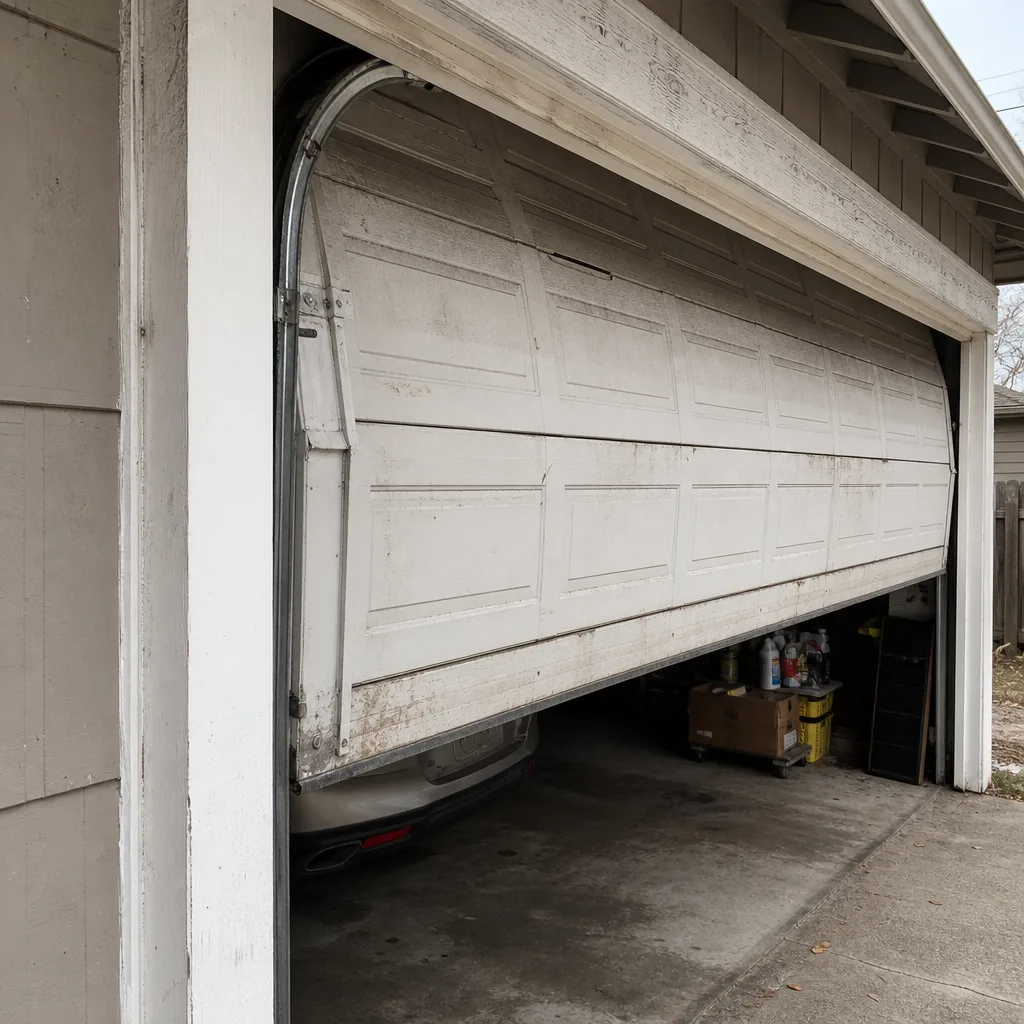 Before
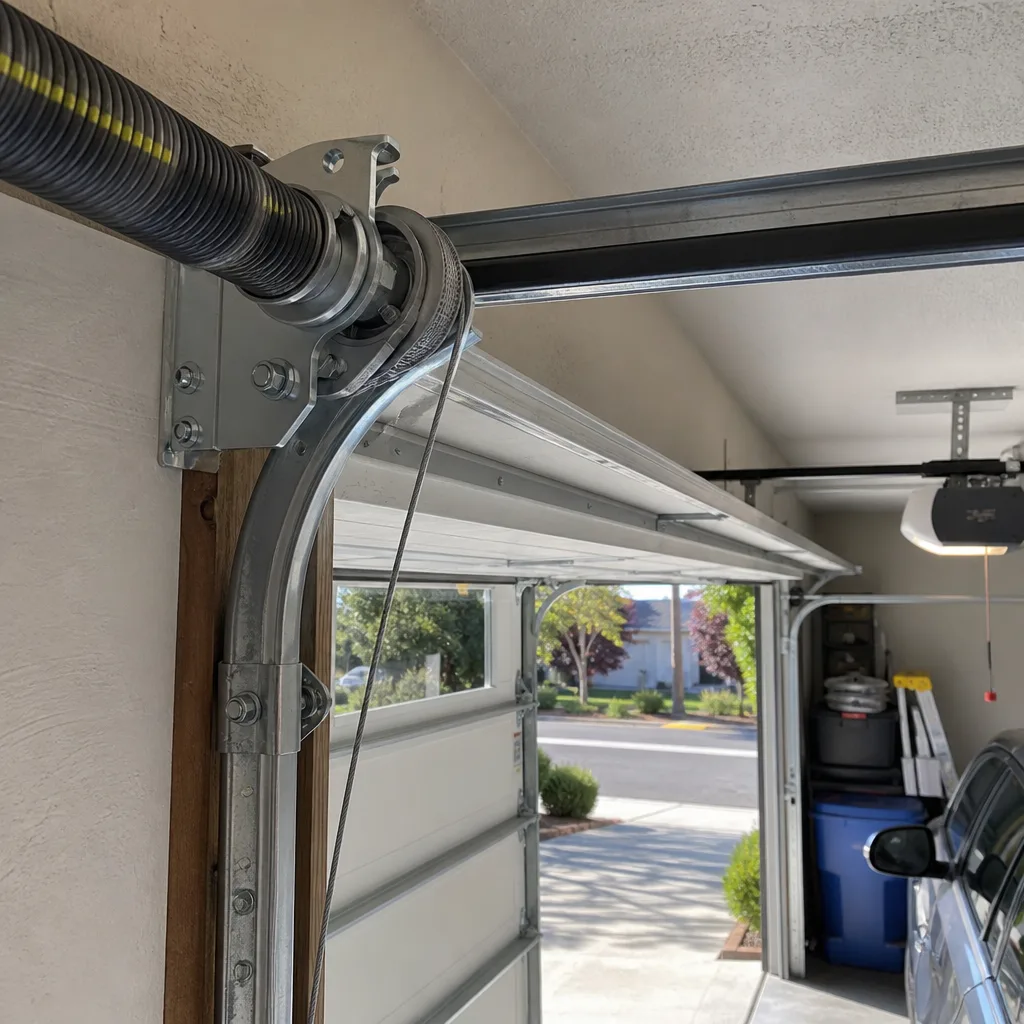 After
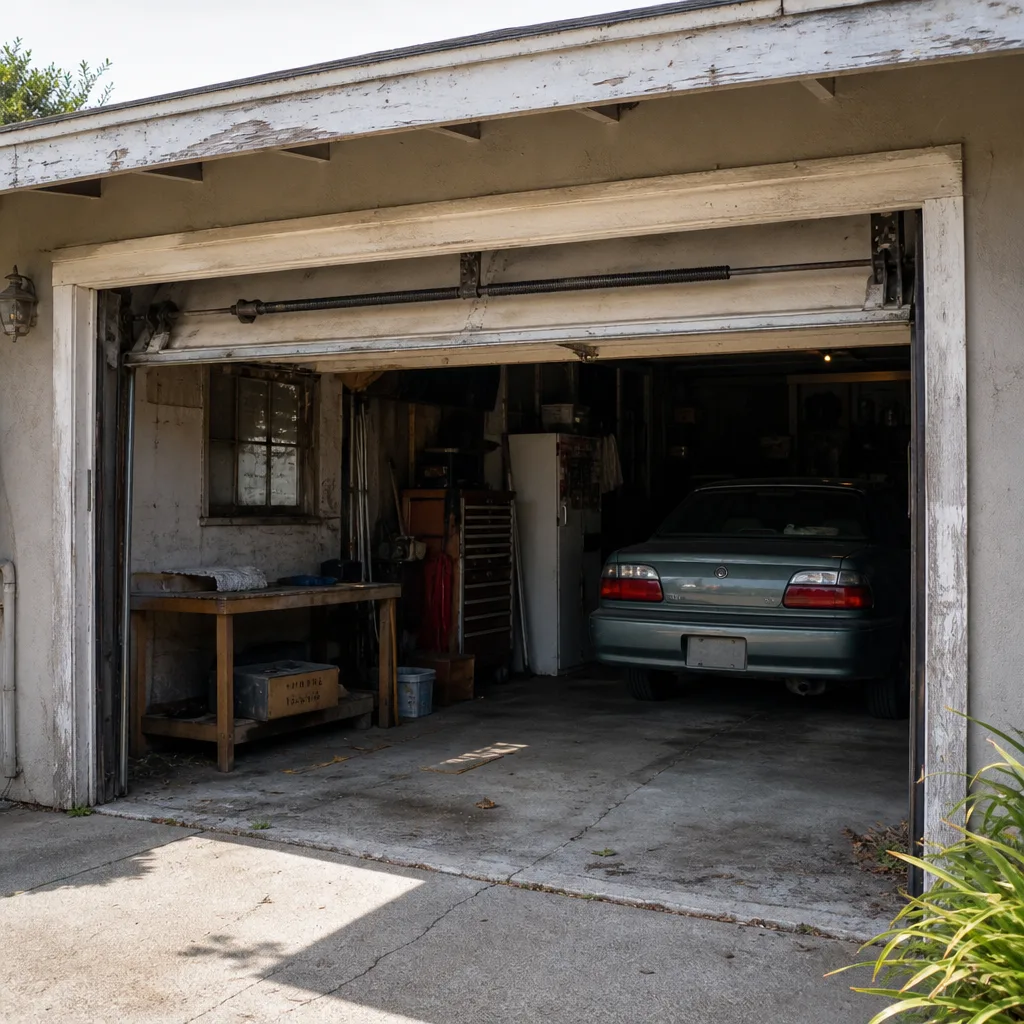 Before
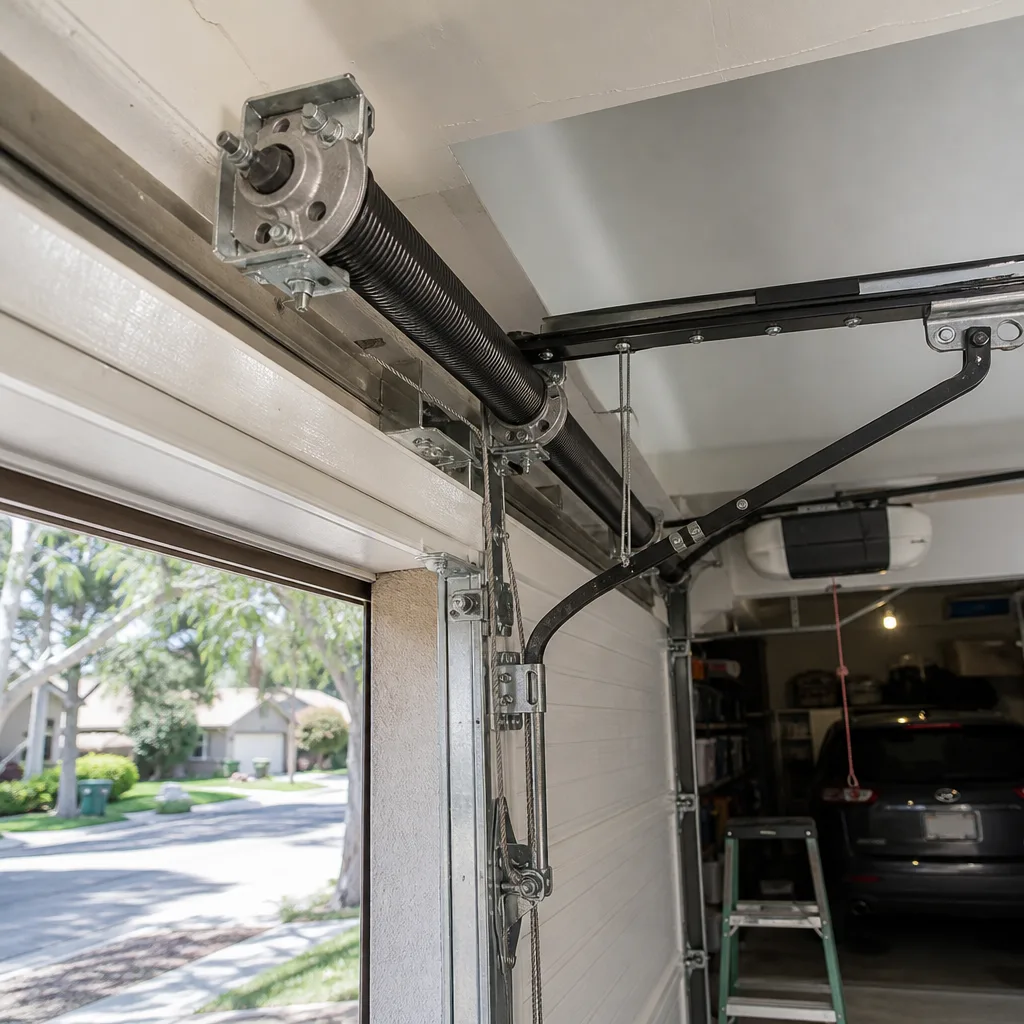 After
Frequently Asked Questions
Your garage door springs are going bad if the door fails the one-hand balance test, meaning it drifts down when opened halfway and released, if the springs show visible rust or uneven coil spacing, or if the door has become noticeably heavier to lift manually. Springs weaken gradually, and the balance test catches that decline months before a snap. Call (877) 265-9458 if you’re seeing these signs and want a free assessment in Willow Glen.
A grinding noise means metal is dragging on metal, and the usual culprit is a roller with a failed internal bearing that’s now sliding along the track instead of rolling. Grinding can also come from the opener’s internal drive gear, especially on older Chamberlain and Craftsman units. If the sound comes from the sides of the door, it’s a roller. If it’s from the opener housing itself, it’s the gear.
A noisy garage door isn’t always dangerous, but the sounds that indicate worn springs or fraying cables are, because those components can fail suddenly under load. Squealing from dry hinges is an annoyance, but a banging sound from sections colliding can indicate a crack that’s growing. If the noise is new or getting worse, have the door inspected before it becomes a safety issue.
Give your garage door a visual check every time you change smoke detector batteries, which for most Willow Glen households is twice a year. Look at the springs, cables, and rollers for rust or fraying, and run the balance test. Spring in particular is a good time to check, since winter temperature swings in Willow Glen are when metal fatigue announces itself.
Replacing garage door springs yourself is not recommended. Torsion springs are wound under extremely high tension, and an incorrect release can cause serious injury. Even extension springs, which look simpler, require the safety cables and mounting hardware to be installed to exact spec. This is a repair where the cost of a professional is the cost of not getting hurt.
Yes, in almost every case, your garage door gives a warning before it breaks completely. A spring that’s about to snap makes a louder-than-normal metallic pop as it settles, shows rust, and usually causes a balance failure first. Cables fray before they snap. Openers grind before they stop. Learning to read those warnings is exactly what this guide is for. If you’re seeing them, call (877) 265-9458 before the warning becomes a breakdown.
The Bottom Line
Your garage door talks to you before it fails. The sounds, the visual clues, and the behavior changes described in this guide are the language of a machine under stress, and the message is almost always: fix this now, while it’s cheap, or fix it later, when it’s an emergency. In Willow Glen, with our mix of old doors and new openers, the warning signs are more varied than in newer neighborhoods. The balance test catches spring fatigue early. A flashlight catches cable fray and roller wear. Your ears catch the difference between a dry hinge and a dying gear. Any one of these signals, caught early, is a minor repair. Missed, they become a door that won’t open on a Monday morning. If you’ve spotted a warning sign, call (877) 265-9458 for a free estimate, or visit our Garage Door Installation in Willow Glen page to understand your replacement options if the door has reached the end of its service life.
Written by the team at Granite Garage Door Repair, serving Willow Glen since 2017. Explore more guides & resources on garage door maintenance and repair.