
Last updated November 3, 2026
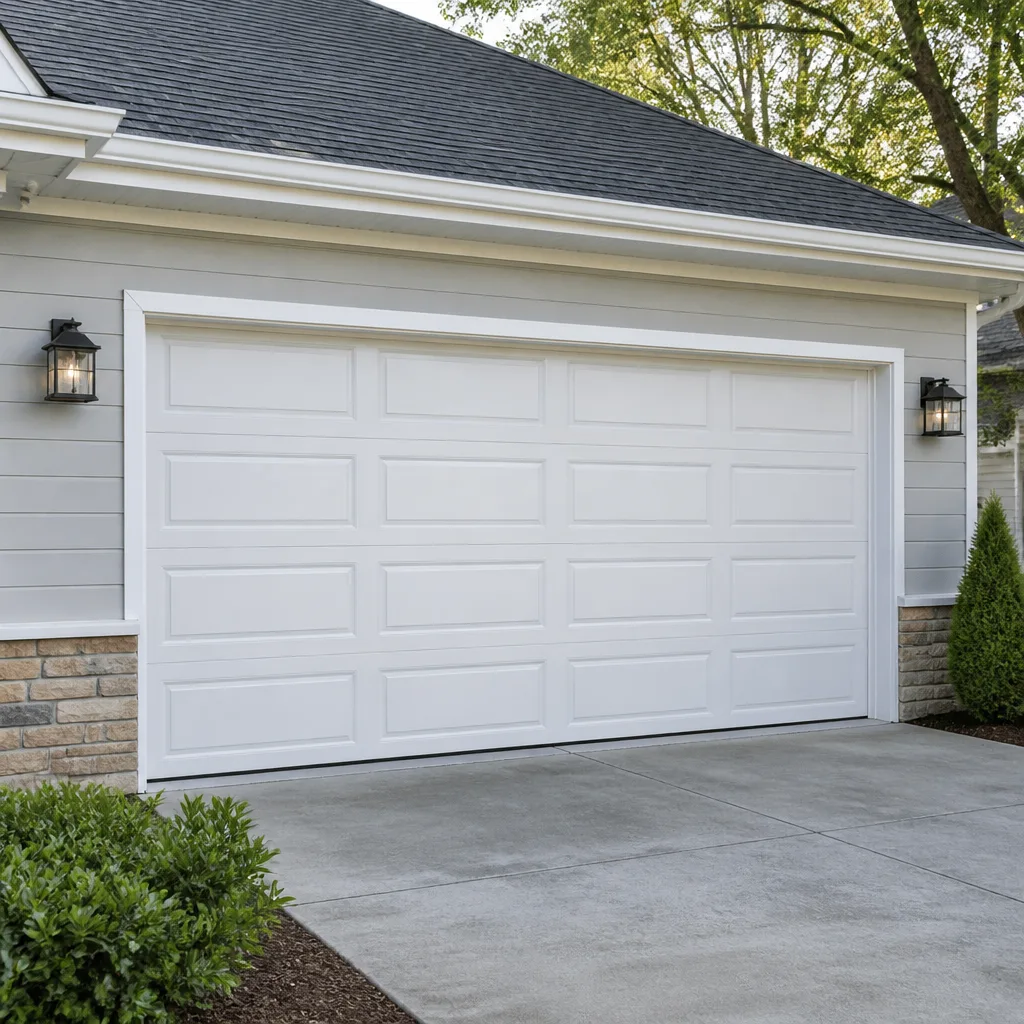 Raised-panel steel
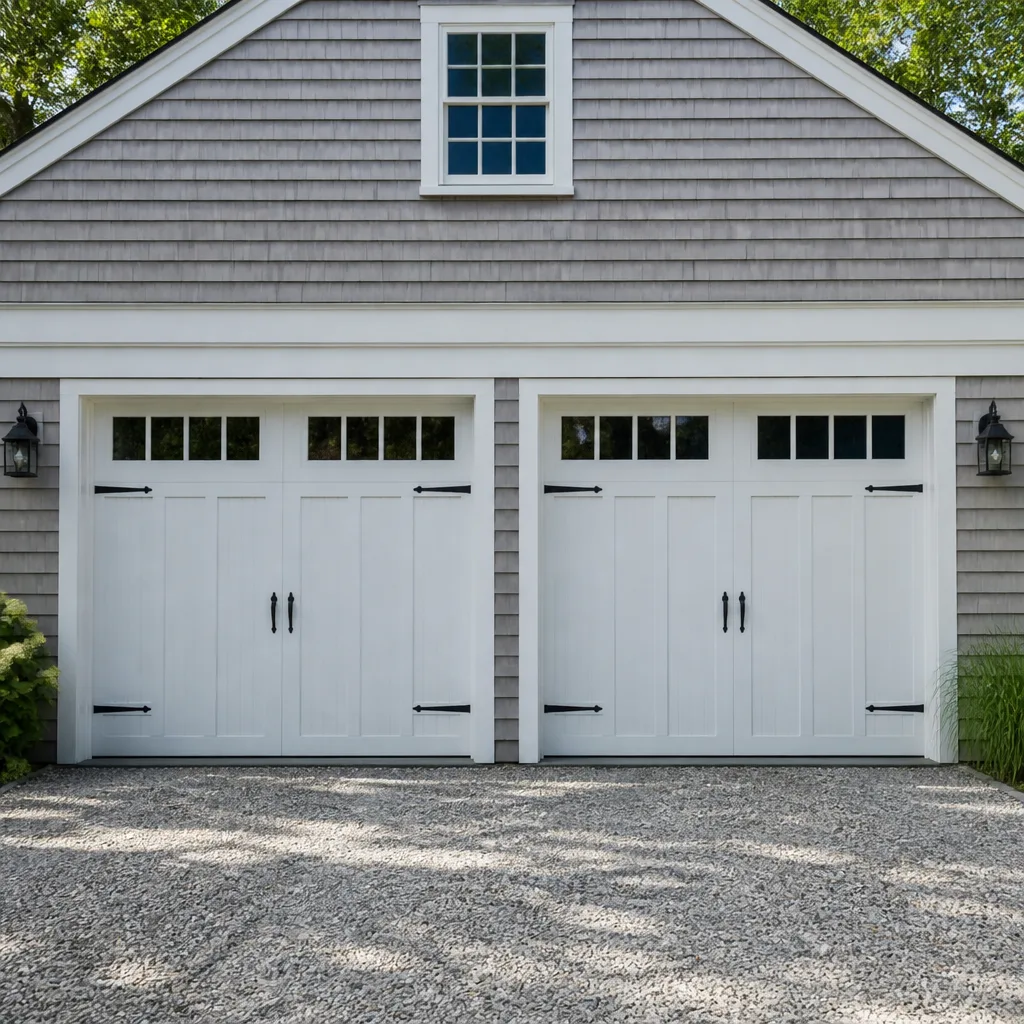 Carriage house
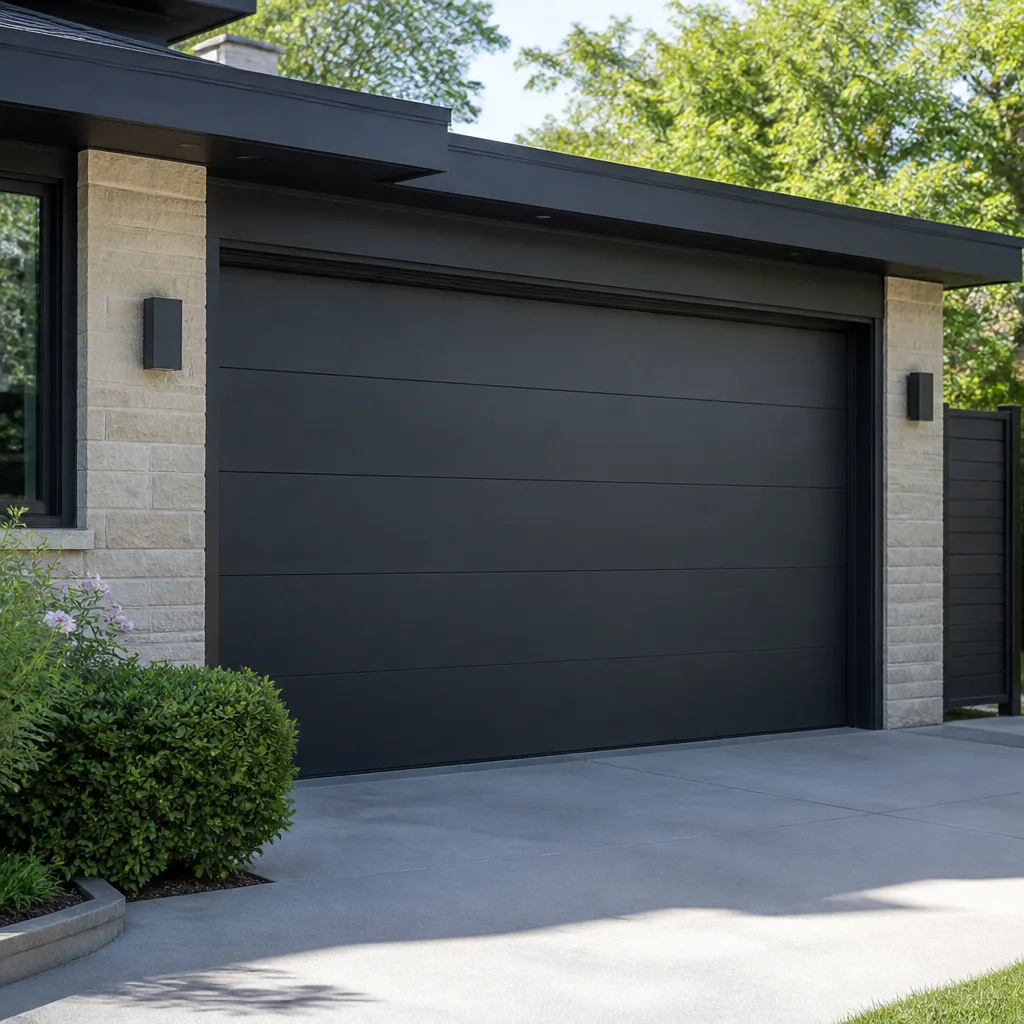 Modern flush
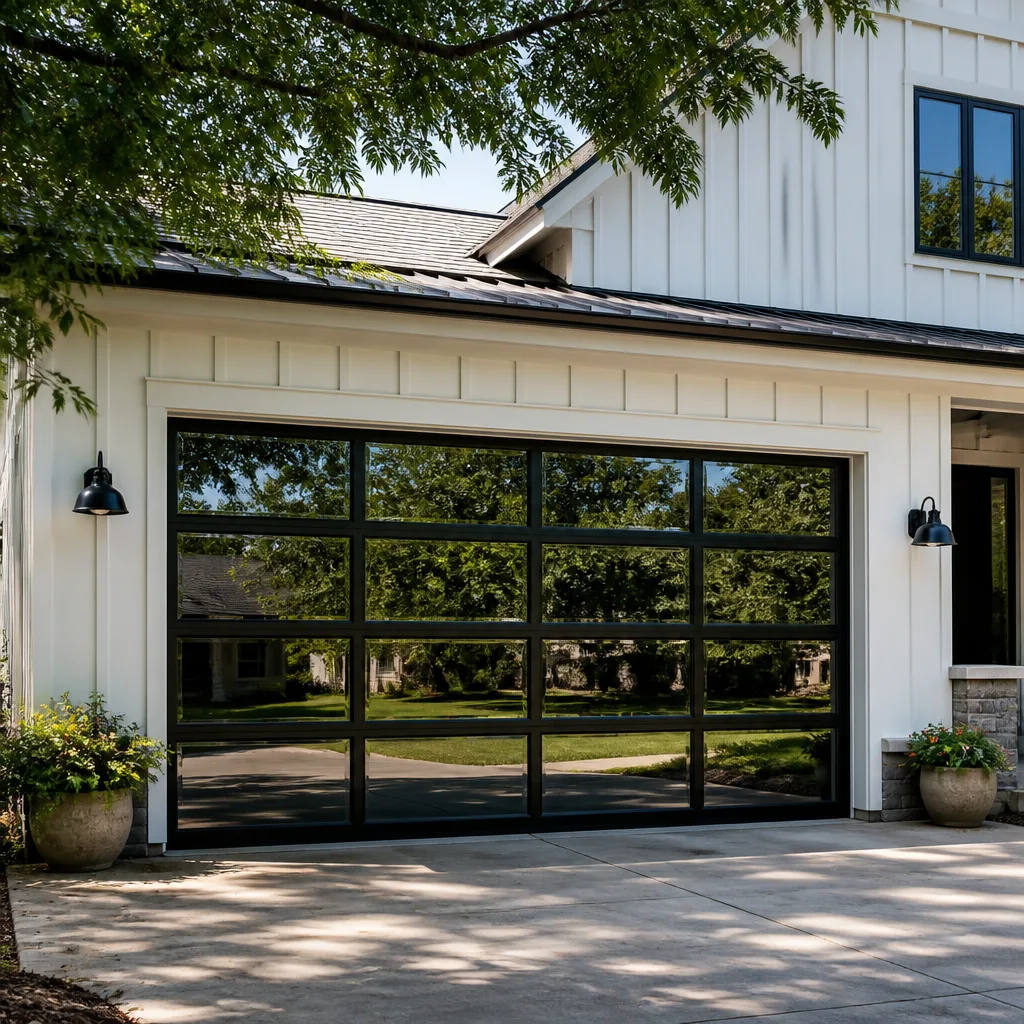 Full-view glass
 LiftMaster openers
 Chamberlain openers
Full 25-point door and opener safety check with every visit - springs, cables, rollers, tracks, and your LiftMaster or Chamberlain opener included
You get a price before we start. It does not change when the truck arrives.
Get your free estimateThe Complete Garage Door Repair Guide for Willow Glen Homeowners
Most garage door breakdowns in Willow Glen don’t start with a dramatic snap. They start with a sound. A grind. A hesitation. A door that sits slightly crooked in the frame. By the time a car is stranded inside the garage, at least two or three components have usually been failing quietly for months. This guide walks through a component-by-component diagnosis framework so you can identify what actually failed before you spend money fixing the wrong thing, and for more guides & resources on keeping your door running, see our blog. We’ll cover the triage order that professional technicians use, the specific quirks of Willow Glen’s older craftsman-era garages, and where each major brand hides the serial plate you’ll need for any parts order.
Quick Answer
Our Garage Door Repair services in Willow Glen usually address one of three things: a broken spring or cable, a failing opener, or worn rollers and hinges. The cost to fix it depends entirely on which component failed first, and the honest answer for most Willow Glen homes is that a trained technician should do the spring and cable work while rollers and basic opener diagnostics are manageable for a careful homeowner. Granite Garage Door Repair identifies the root cause before recommending any repair, so you don’t pay for springs when the real problem is a cable drum.
Styles & brands we work with
- Raised-panel steel
- Carriage house
- Modern flush
- Full-view glass
- LiftMaster openers
- Chamberlain openers
Table of Contents
- The Component Triage Order: Why Cables and Drums Come Before Springs
- Willow Glen’s Low-Headroom Problem: Older Garages, Limited Space
- Torsion Springs vs. Extension Springs: What Willow Glen Homes Actually Have
- Reading Roller and Hinge Wear Patterns Before They Strand You
- Garage Door Opener Diagnostics: The Unit, Not the Remote
- Brand-Specific Notes for Clopay and Amarr Doors in Willow Glen
- DIY vs. Call a Professional: Clear Thresholds by Component
- Common Mistakes to Avoid
- When to Call a Professional
- Frequently Asked Questions
The Component Triage Order: Why Cables and Drums Come Before Springs
When a garage door won’t open, the first assumption is almost always a broken spring. And sometimes that’s right. But in our diagnostic work across Willow Glen, we see a pattern that most homeowners never consider: a worn cable drum pulls the lift cable slightly off its groove, which shifts tension unevenly, which makes the door sit crooked, which makes the spring work harder, which eventually snaps the spring. The spring was the symptom. The cable drum was the cause.
Here’s the triage order we follow when we arrive at a Willow Glen garage door repair call. It prevents paying for a spring replacement when the real fault sits two feet away:
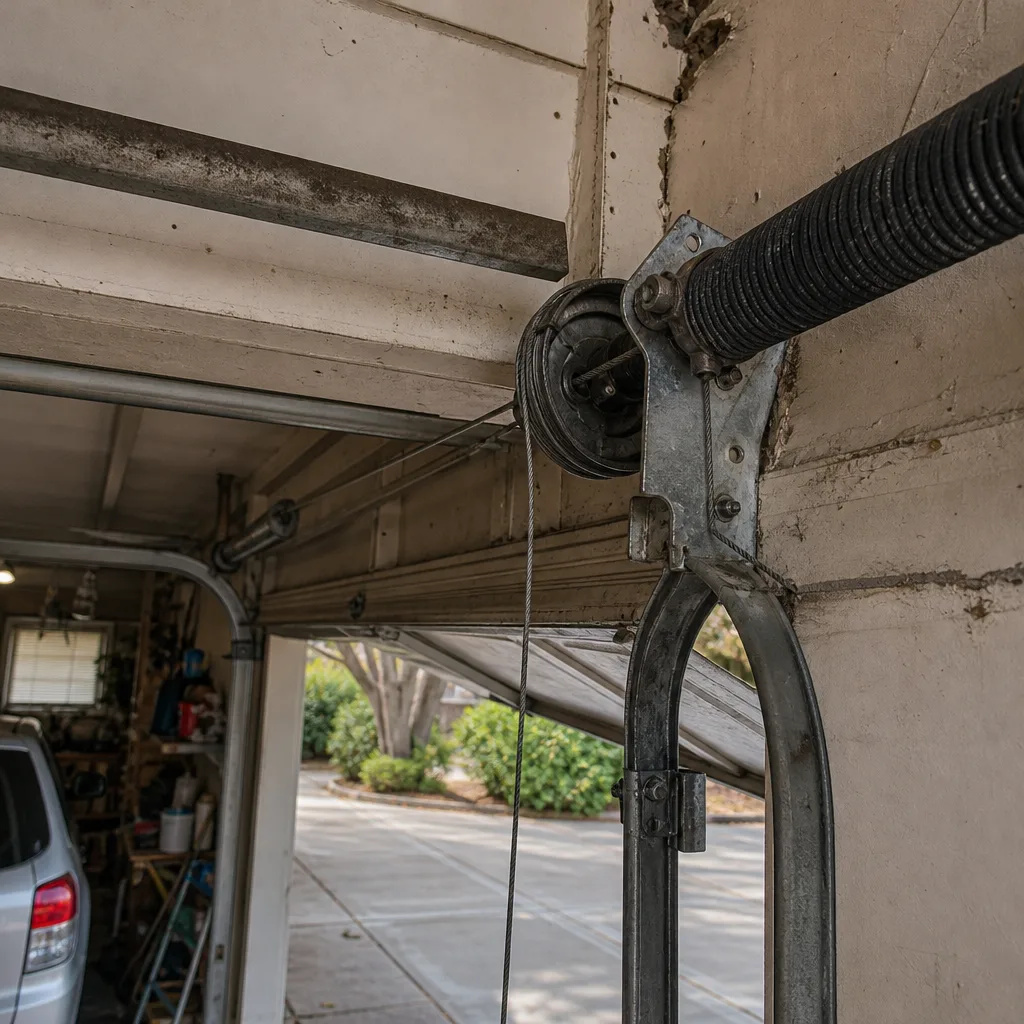
- Cables first. Look at both lift cables where they wrap around the drums at the top of the door. If one cable is frayed, kinked, or riding out of its groove, that’s the starting point. A cable that slipped off the drum will make the door jerk to one side.
- Drums second. The drums sit on the torsion tube above the door. A worn drum groove lets the cable slip. A drum that’s cracked or spun on the shaft changes the lift geometry. This part gets overlooked constantly because homeowners don’t know it exists.
- Springs third. After cables and drums check out, then you evaluate the spring. A visible gap in a torsion spring means it broke. An extension spring that’s stretched, rusted, or dangling means it failed. Springs do wear out on their own, especially after 10,000 to 20,000 cycles, but they wear faster when cables and drums have been pulling unevenly.
- Rollers and hinges fourth. These are wear parts. They grind down gradually and rarely cause a sudden total failure, but they create the noise and friction that accelerate everything else.
- Opener last. If the door works fine by hand but won’t move with the opener, then the opener is the issue. But you check the door itself first because a door that’s binding will burn out a healthy opener in months.
This order matters because it mirrors how a Willow Glen garage door actually fails in the real world. Parts wear in sequence. Fix the earliest failure point and the downstream problems often never happen.
Willow Glen’s Low-Headroom Problem: Older Garages, Limited Space
Willow Glen has a lot of homes built between the 1920s and 1960s, and their garages reflect that era. The framing is different from what you’ll find in newer subdivisions further south. Ceilings are lower. The distance between the top of the door opening and the ceiling joists is often less than 12 inches. In some of the craftsman-era homes off Lincoln Avenue, we’ve measured as little as 6 inches of headroom.
Why that matters: a standard torsion spring assembly needs vertical clearance to mount. When the headroom is tight, the installation has to use either a low-headroom track kit or a rear-torsion setup where the spring tube mounts further back. The wrong configuration won’t fit, and a technician who doesn’t recognize the framing will either force something that binds or tell you a new door won’t work at all.
What this means for Willow Glen homeowners specifically:
- Spring replacement on older doors requires matching the existing configuration. You can’t just swap in whatever spring is on the truck. The wire size, inside diameter, and length are specific to the door weight and the headroom geometry.
- Track replacement needs a low-headroom option. If the tracks are being replaced, a standard-radius track will hit the ceiling. Low-headroom tracks route the top panel differently.
- New door installations sometimes need a rear-torsion conversion. This moves the spring assembly off the header and onto a bracket further into the garage. It’s a clean solution but requires knowing which manufacturers support it. Clopay and Amarr both make rear-torsion options on certain models.
- Pull-down stairs and storage racks complicate the picture. Many Willow Glen garages have attic access or ceiling storage that intrudes into the space where a rear-torsion assembly would sit. That has to be accounted for before ordering parts.
The takeaway isn’t that Willow Glen garages are uniquely difficult. It’s that they’re specific. The fix that worked on your neighbor’s 1995 house in Cambrian may not be the right fix for your 1938 house off Cherry Avenue.
Torsion Springs vs. Extension Springs: What Willow Glen Homes Actually Have
Two spring systems show up in Willow Glen garages, and knowing which one you have tells you a lot about the repair. Torsion springs are the ones mounted on a horizontal tube above the closed door. Extension springs are the two long springs that run along the horizontal track on either side of the door.
The rough rule: doors from the mid-1970s onward in Willow Glen usually have torsion springs, especially on double-wide doors. Older single-car doors and some craftsman-era installations still run extension springs. Both systems do the same job, which is counterbalancing the weight of the door so a small motor or a single person can lift it. But the failure modes are different.
Torsion springs: These are rated in cycles, typically 10,000 to 20,000 for standard springs and 30,000-plus for high-cycle springs. A cycle is one full open and close. For a family that opens the door four times a day, a 10,000-cycle spring lasts roughly seven years. When a torsion spring breaks, it snaps loudly, often described as a gunshot. The door becomes extremely heavy because the spring is no longer assisting. The door will likely refuse to lift more than a few inches.
Extension springs: These stretch and contract, and they fail differently. Instead of a snap, they typically sag, stretch, or detach at one end. Sometimes a safety cable prevents them from flying across the garage when they break. Older Willow Glen garages that never had safety cables installed are more dangerous than the homeowners realize.
The critical safety point with any spring: torsion springs are under hundreds of pounds of torque, and extension springs under hundreds of pounds of tension. A spring that lets go during a DIY repair can cause severe injury. This is not a starter project. The role of a homeowner is to identify that the spring has failed, not to remove and replace it. If you’re not sure which spring system you have, a professional can tell you in about 30 seconds by looking at the track configuration. If you want to learn more about how we approach spring failures in this area, our Garage Door Repair in Willow Glen page covers the repair process in detail.
One Willow Glen-specific note: older garages with low ceilings sometimes have a hybrid setup, where a torsion spring was retrofitted into a framing system designed for extension springs. The retrofit is usually fine, but it means the spring spec is specific to that door and can’t be guessed from the door size alone. Any parts order has to start from the actual spring dimensions, not a catalog guess.
Reading Roller and Hinge Wear Patterns Before They Strand You
Rollers and hinges announce their failure long before they break. The problem is that most people don’t know what the announcement sounds like. Here’s what we listen for when a Willow Glen homeowner calls about a noisy door:
- A rumbling, grinding sound that changes with door travel usually means roller bearings are worn. The roller still spins, but it’s not rolling smoothly in the track. There’s metal-on-metal friction.
- A sharp squeak at specific points in the travel is typically a hinge pin that’s dry or starting to bind. Hinge noise is positional. You’ll hear it at the same spot every time the door passes through.
- A rattle when the door is moving often means a roller stem is loose in the hinge barrel. Over time, the stem wallows out the hole, and the roller wobbles.
- A door that shudders near the bottom of the travel can be a hinge that’s worked loose from the panel. The panel flexes instead of tracking cleanly.
Rollers are a consumable. Standard steel rollers last maybe five to seven years in a Willow Glen garage before the bearings degrade. The climate is relatively mild, but temperature swings and the fine dust that blows through the valley still work their way into the bearing races. Nylon rollers with sealed bearings last longer and run quieter, and they’re a common upgrade on older doors.
Hinges are different. They don’t wear out on a schedule; they fail when they rust through, crack, or tear out of the panel. A hinge that tears out of the panel is usually a sign that something else went wrong first, like a cable that slipped and put uneven load on one side of the door. Fixing the hinge without addressing the underlying load issue means the repair will fail again.
The practical check for a Willow Glen homeowner: stand inside the garage with the door closed, then open it halfway and look at the rollers, hinges, and track alignment. If the door panels look like they’re sawing back and forth against the track, or if any roller isn’t seated fully in the track, that’s a repair call before it becomes an emergency.
Garage Door Opener Diagnostics: The Unit, Not the Remote
When an opener stops responding, the first thing people do is change the remote battery. Then they re-pair the remote. Then they try the wall button. When none of that works, they assume the opener motor is dead. Sometimes it is. But in our experience with the openers found in Willow Glen garages, the motor is often fine and the logic board, gear, or sensor system is the actual failure point.
The diagnostic sequence for an opener that won’t run:
- Confirm the opener has power. Check the outlet, the breaker, and the GFCI. Openers in older Willow Glen garages are sometimes plugged into a circuit that also runs a freezer or washing machine, and an overloaded circuit can trip intermittently.
- Try the wall button. If the wall button works but the remote doesn’t, the problem is in the remote, the receiver, or the antenna wire. That’s usually a cheap fix.
- Check the safety sensors. The two sensors near the bottom of the door opening have small LED lights. If one or both are off, blinking, or showing an amber light, the beam is misaligned or the wiring is damaged. This is the single most common opener fault we see in Willow Glen.
- Listen for the motor. If you press the button and hear a hum or a click but the door doesn’t move, the problem is either the drive gear, the belt or chain, or the capacitor. A drive gear failure is common on openers more than a decade old.
- Check the opener’s response to manual operation. Pull the release handle and lift the door by hand. If the door is heavy, the opener was working against a failing spring, and the spring is the repair, not the opener.
One note specific to modern openers: LiftMaster, Chamberlain, Craftsman, and Genie units with Wi-Fi or myQ integration fail in ways that older openers didn’t. The motor may be perfectly fine while the Wi-Fi module drops its connection and needs a reset. Or the opener runs fine from the wall button but won’t respond to the app. If you’re dealing with an opener-specific problem, our Garage Door Opener Repair in Willow Glen page walks through how we diagnose and repair opener faults on the unit itself, not just the remotes.
The repair-first philosophy applies here too. A bad logic board on a LiftMaster is a replaceable part. You don’t always need a new opener. But if the opener is a chain-drive model from the early 2000s and the gear is stripped, the smarter money is often a replacement. A good technician will tell you which path makes sense for your specific unit.
Brand-Specific Notes for Clopay and Amarr Doors in Willow Glen
Willow Glen’s housing stock means the garage doors you’ll see tend to cluster around a few manufacturers. Clopay and Amarr show up constantly on both the older wood-panel doors and the newer steel replacements that went in during renovations. If you need parts, the first step is finding the serial plate, because that plate tells you the door model, the manufacturing date, and sometimes the original spring spec.
Clopay serial plate locations: Clopay typically places an identification sticker or plate on the inside of the bottom panel, near the left or right edge. On older Clopay doors, it can be on the top section near the corner. If the sticker is gone, look for a stamped number on one of the end hinges or the bottom bracket. Clopay doors from the 1990s and early 2000s sometimes have the serial stamped directly into the top of the first panel.
Amarr serial plate locations: Amarr usually puts a metal plate or heavy sticker on the inside of the top panel, near the center. Some Amarr models also carry a secondary sticker near the bottom corner of the bottom panel. The Amarr plate typically includes the door width and height, the spring color code, and the manufacturing plant code. If the plate is painted over or missing, the spring color code often survives on the torsion spring itself.
Why the brand matters for repair: Clopay and Amarr use different panel thicknesses, different hinge mounting patterns, and different track profiles. A hinge that fits a Clopay may not align perfectly on an Amarr even if the door size is identical. Using the wrong hinge stresses the panel and shortens the life of the repair. That’s one reason we work across the major brands, including the ones already common in Willow Glen garages. A Garage Door Installation in Willow Glen project starts with the same principle: match the parts to the actual door, not a generic guess.
We also see a fair number of Wayne Dalton, Raynor, and Craftsman doors in the neighborhood, though less frequently than Clopay and Amarr. Each has its own serial plate location, and each has its own quirks. A Raynor torsion spring, for example, uses different winding cone dimensions than a Wayne Dalton. The point for a Willow Glen homeowner: write down the serial number before you call for parts. It saves a service visit and keeps the quote accurate.
DIY vs. Call a Professional: Clear Thresholds by Component
There’s a line in garage door repair between what’s reasonable for a homeowner to handle and what’s genuinely dangerous, a topic we explore fully in DIY vs Professional Garage Door: The Willow Glen Homeowner’s Decision Guide. The line isn’t about skill level. It’s about stored energy. Here’s the breakdown by component:
Safe for careful DIY:
- Roller replacement on rollers that are clearly worn or noisy. The process is straightforward: bend back the track slightly, swap the roller, bend the track back. The risk is low if you take your time.
- Hinge lubrication with a garage-door-specific lubricant. Not WD-40, which is a solvent and will strip the grease out of a hinge. A silicone or lithium spray is the right tool.
- Sensor cleaning and alignment. Wipe the lenses, check the LEDs, adjust the brackets so the beam connects. This fixes a large percentage of opener problems without any parts at all.
- Remote battery replacement and re-pairing. Straightforward for LiftMaster and Chamberlain remotes, usually a matter of holding a button on the opener and pressing the remote.
Always call a professional:
- Torsion spring replacement. The spring is wound tight enough to break bones or worse if it lets go. The winding bars, the set screws, the unwinding procedure: none of this is forgiving of mistakes.
- Extension spring replacement, especially on older doors without safety cables. The tension is lethal.
- Cable replacement or re-seating. The cable is under the same load as the spring. If it snaps while you’re working on it, it becomes a steel whip.
- Track realignment or replacement on a door that’s come out of plumb. The door weight is on that track, and a track that lets go under load drops the door.
- Any work involving the bottom bracket. The bottom bracket attaches the cable to the door. Removing it releases the cable tension. This is one of the most dangerous parts on the entire door.
The cleanest summary: if the part you’re about to touch is connected to a cable or a spring, stop. Call someone who does this every day. If it’s a roller, a hinge pin, a sensor, or a remote battery, proceed carefully. We’d rather tell you that over the phone than have you find out the hard way. For anything in the gray area, the Granite Garage Door Repair home page has our contact details and service scope.
Common Mistakes to Avoid
- Replacing springs when the cable drum was the root cause. This is the number one misdiagnosis we see in Willow Glen, and it’s expensive because the new spring fails prematurely under the same unbalanced load. Check the drums before condemning the springs.
- Skipping the low-headroom requirement. A standard spring setup won’t physically fit in some of the older Willow Glen garages. Ordering parts based on door size alone produces a spring you can’t install.
- Lubricating everything with WD-40. WD-40 dissolves grease. On a garage door, that means the hinges run dry and the rollers grind. Use a garage-door-specific silicone or lithium spray instead.
- Ignoring a noisy door because it still works. Noise is the early warning system for roller and hinge wear. By the time the noise turns into a door that won’t move, you’ve usually added at least one more failed component to the repair bill.
- Replacing the opener before checking the door balance. A door that’s heavy because of a failing spring will destroy a new opener within a year. Pull the release handle and lift the door by hand first. If it’s heavy, fix the door, not the opener.
- Throwing away the serial plate information. The sticker or plate that seems like it doesn’t matter is the single most useful piece of information for getting the right parts on the first visit. Photograph it before it fades.
- Attempting cable or spring work from a YouTube tutorial. The tutorial doesn’t know your door’s weight, your spring’s wind direction, or your garage’s headroom. The tolerance for error on a torsion spring is effectively zero.
When to Call a Professional
Call a professional the moment a spring breaks, a cable frays, or the door sits visibly crooked in the opening. Those are load-bearing failures, and they get worse with every attempt to move the door. Call also when the door is heavy by hand, when the opener runs but the door doesn’t move, or when you see a hinge that’s pulled away from the panel. Those symptoms mean the failure is already underway, and continuing to operate the door just accelerates the damage. Granite Garage Door Repair offers free estimates in Willow Glen – call (877) 265-9458 and we’ll tell you what’s actually wrong before any work is quoted.
Frequently Asked Questions
Garage door repair in Willow Glen typically ranges from about $125 for a basic service call and roller replacement to $300 – $500 for a single torsion spring replacement, and higher if multiple components failed. The exact cost depends on which component broke, the door brand and size, and whether the garage has standard or low-headroom framing. Call (877) 265-9458 for a free estimate, and the price is quoted and agreed before any work starts.
For emergency repairs like a broken spring that’s stranded a car inside the garage, we prioritize same-day service calls in Willow Glen whenever possible. Call (877) 265-9458 as early as you can, and we’ll give you an honest answer about today’s availability.
No. The price we quote over the phone is based on the symptoms you describe and the door information you provide, and we finalize the quote before any work begins. If the technician finds an additional failed component once the door is inspected, that’s a separate conversation with a separate quote, agreed with you before anything else is touched. There are no surprise fees at the end of the job.
Our technicians carry the most common springs, cables, rollers, hinges, and opener parts for the brands we service, including Clopay, Amarr, Wayne Dalton, Raynor, LiftMaster, and Chamberlain. For less common parts, we source them quickly and schedule a return visit at no additional trip charge. Call (877) 265-9458 with your door’s serial number and we can usually tell you whether the part will be on the truck.
A door that stops partway is usually fighting a balance problem, a track obstruction, or a failing spring. Try pulling the release handle and lifting the door by hand. If it feels heavy or binds at the same point, the problem is in the door itself, not the opener. If it moves smoothly by hand, the opener’s force settings or travel limits need adjustment. Either way, it’s worth diagnosing before the door strands you completely.
Sometimes, yes. The low-headroom framing in many Willow Glen garages means the spring and track configurations are less common and sometimes more expensive. It’s not that the parts are dramatically pricier. It’s that the right parts are more specific. The good news is that once the correct spec is identified and documented, future repairs are straightforward. We see this pattern constantly in the craftsman-era homes around Lincoln Avenue and Willow Street, as detailed in The Complete Guide to Garage Door in Willow Glen.
The honest answer depends on the door’s overall condition and the cost of the repair. If the door has a single failed component and the panels, tracks, and other hardware are sound, repair is usually the smarter investment. If the door needs multiple major components or the panels are rusted through or sagging, replacement starts to make more financial sense. We’ll tell you which one actually makes sense for your situation, not whichever one makes us more money. Call (877) 265-9458 for a straight assessment.
The Bottom Line
Garage doors fail in sequence, not all at once. A noisy roller becomes a worn hinge, which becomes an unbalanced door, which becomes a snapped spring. The repair that lasts is the one that finds the earliest failure point, not the one that treats the loudest symptom. For Willow Glen homeowners, that means understanding the specific constraints of older garages, matching parts to the actual door brand, and knowing which components are safe to touch and which are not. When the fix is beyond the DIY line, Granite Garage Door Repair provides the diagnosis first, the quote before the work, and a repair that addresses the root cause. Call (877) 265-9458 for a free estimate in Willow Glen.
Written by the team at Granite Garage Door Repair, serving Willow Glen since 2017.
See the difference
 Before
 After
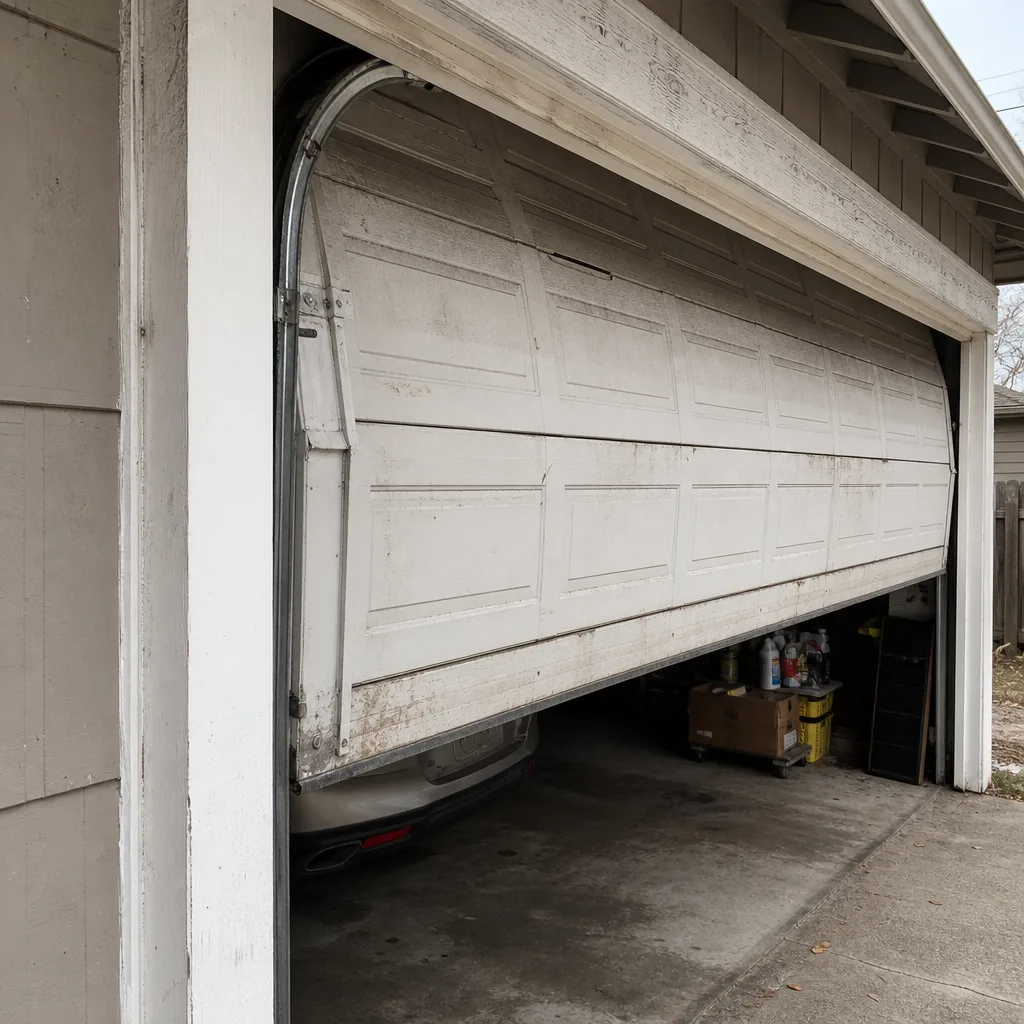 Before
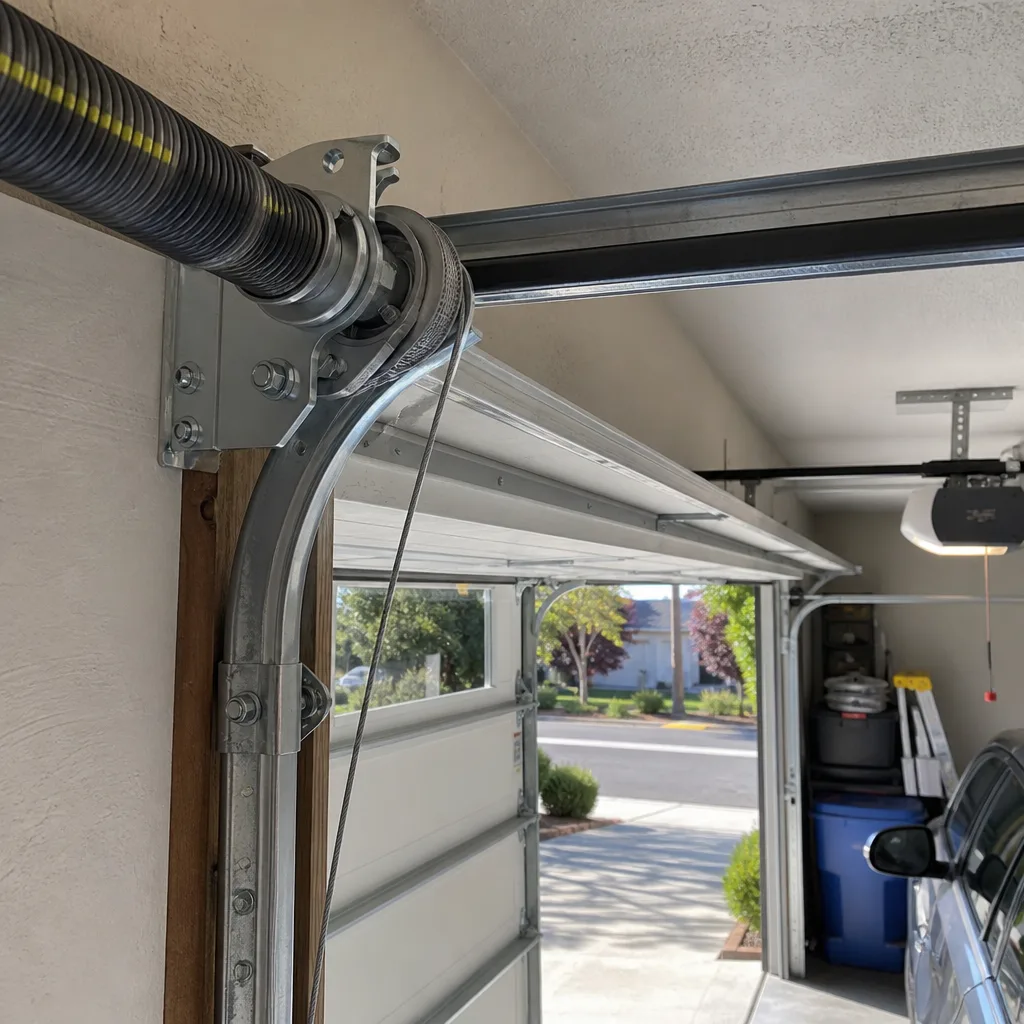 After
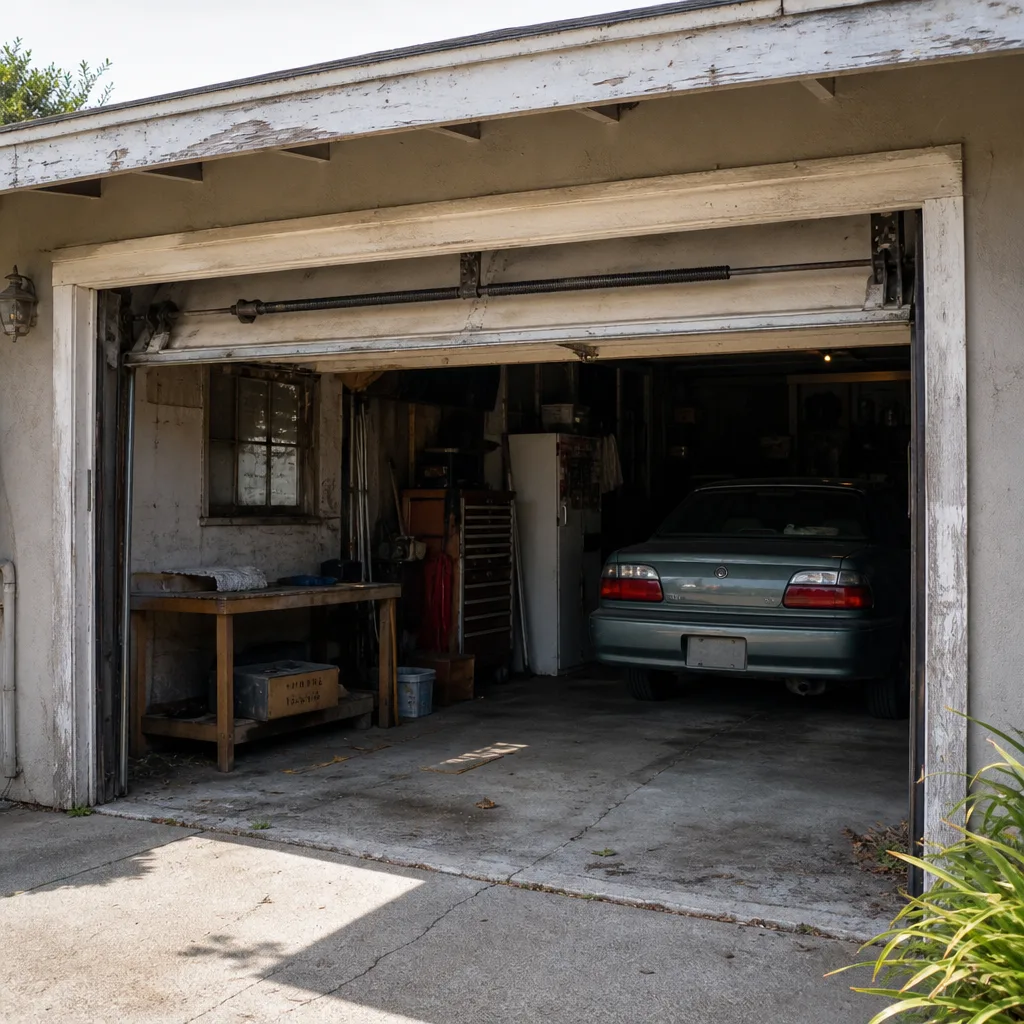 Before
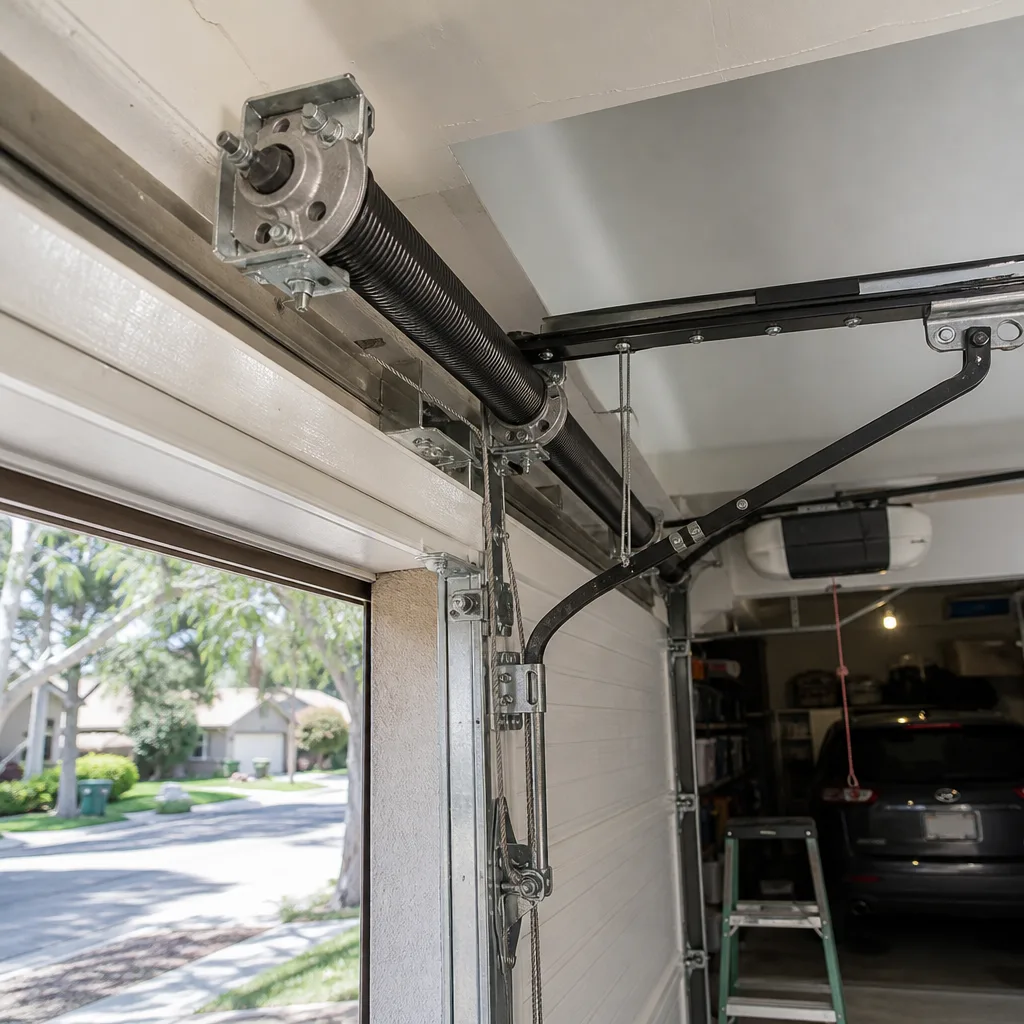 After