
Last updated November 2, 2026
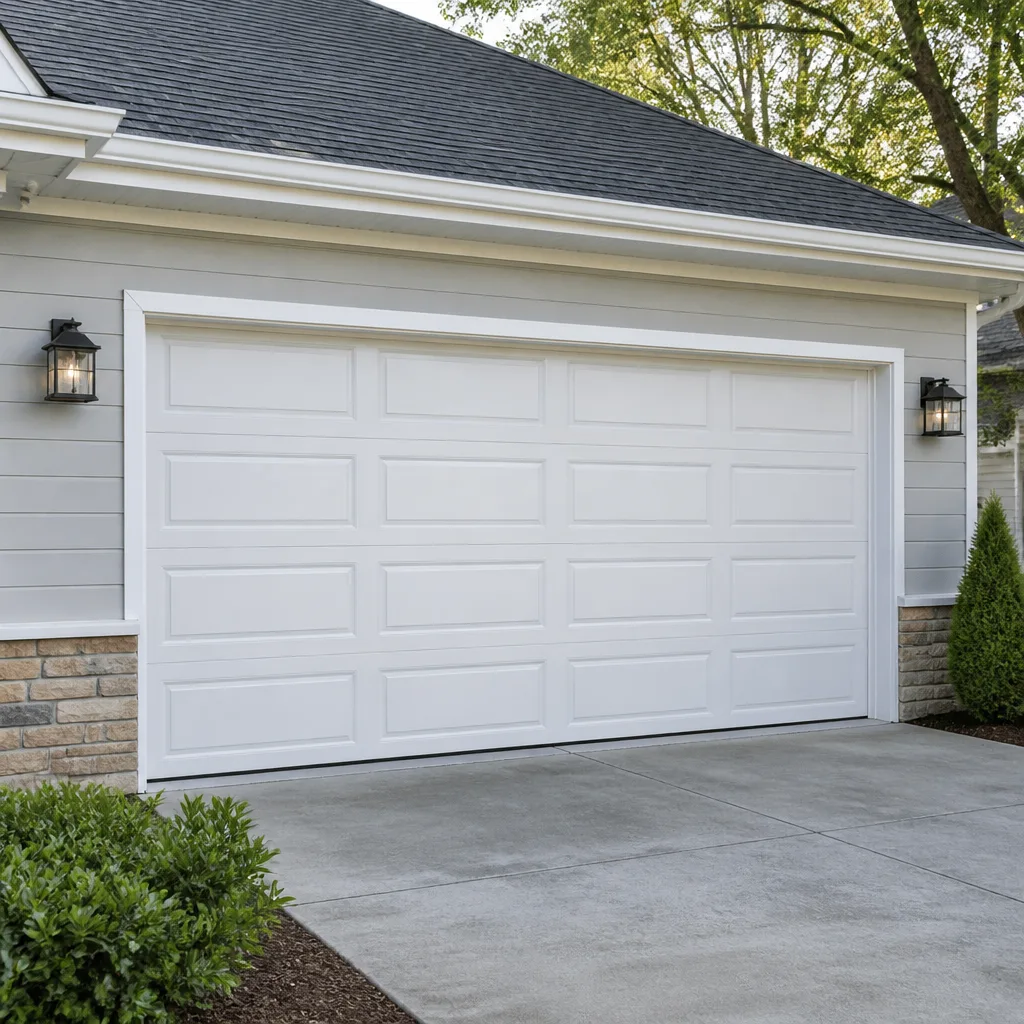 Raised-panel steel
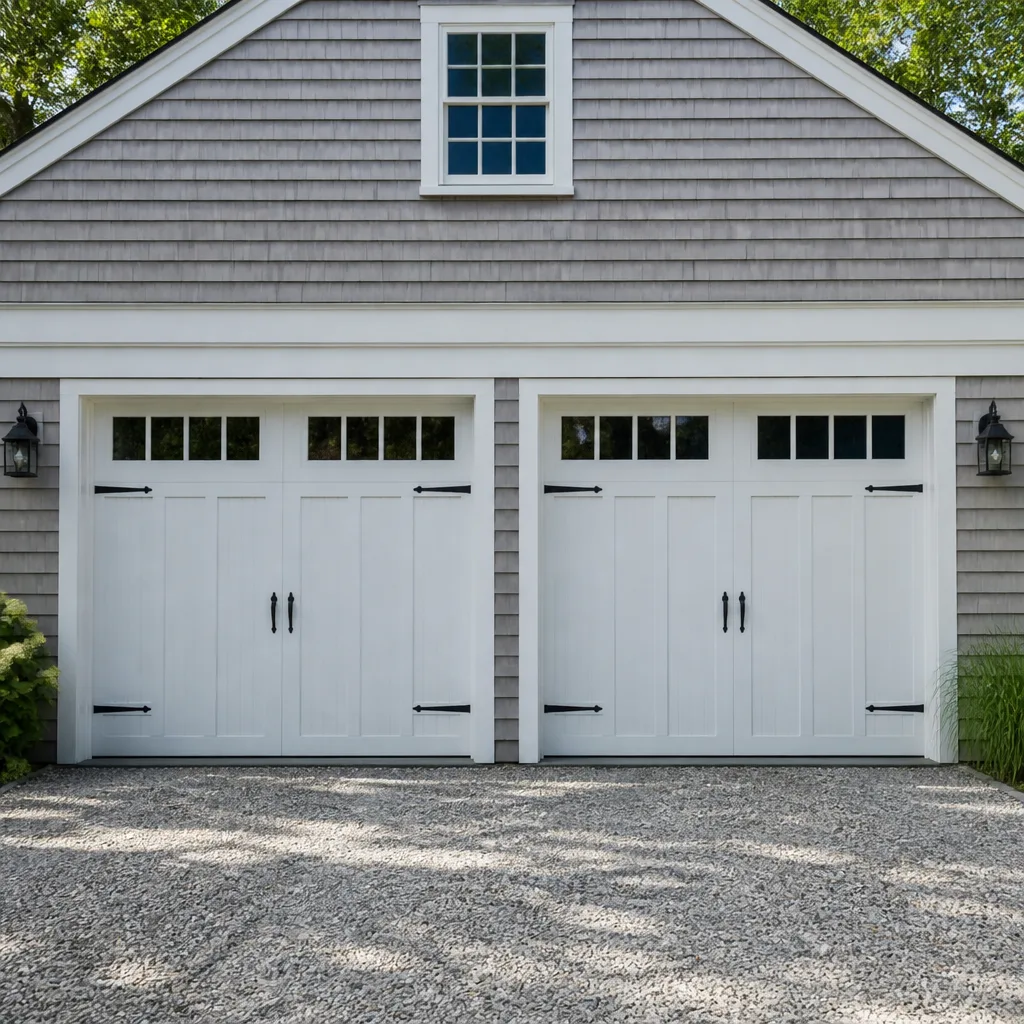 Carriage house
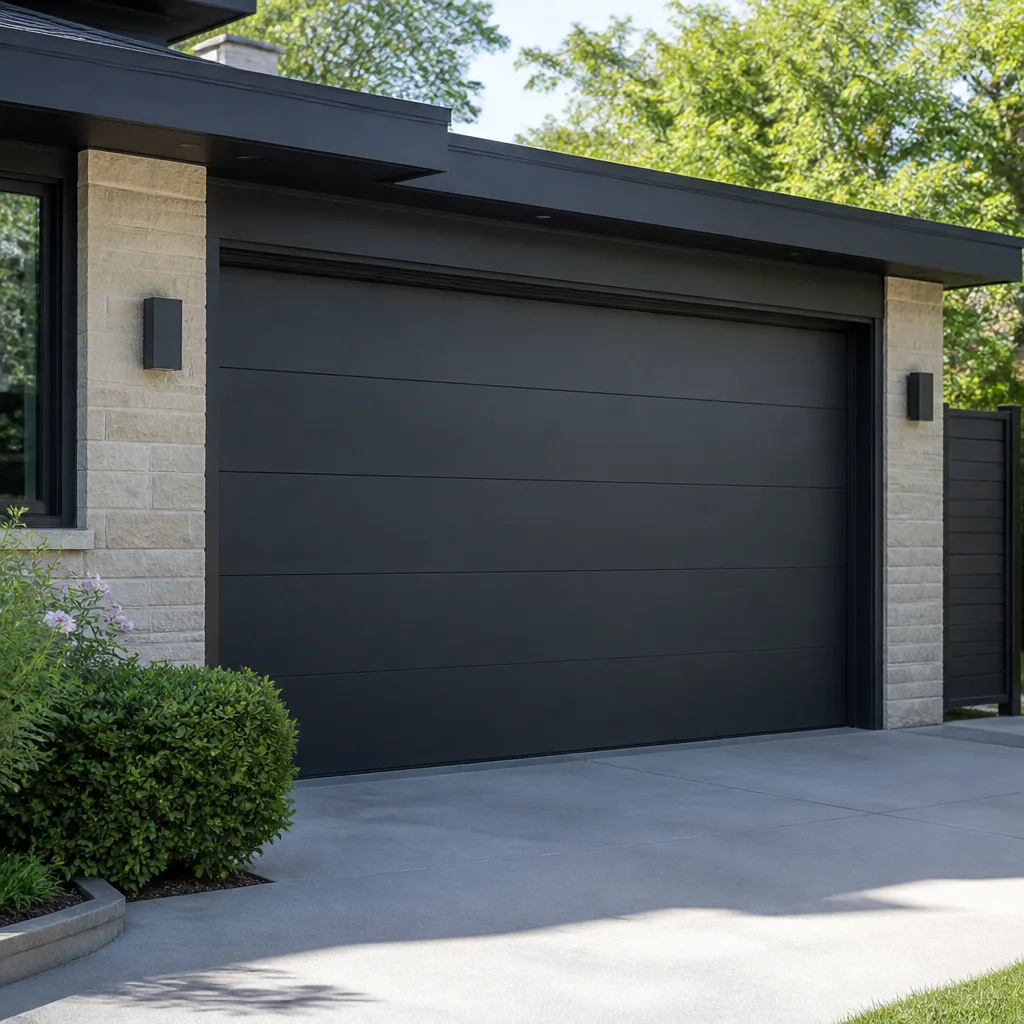 Modern flush
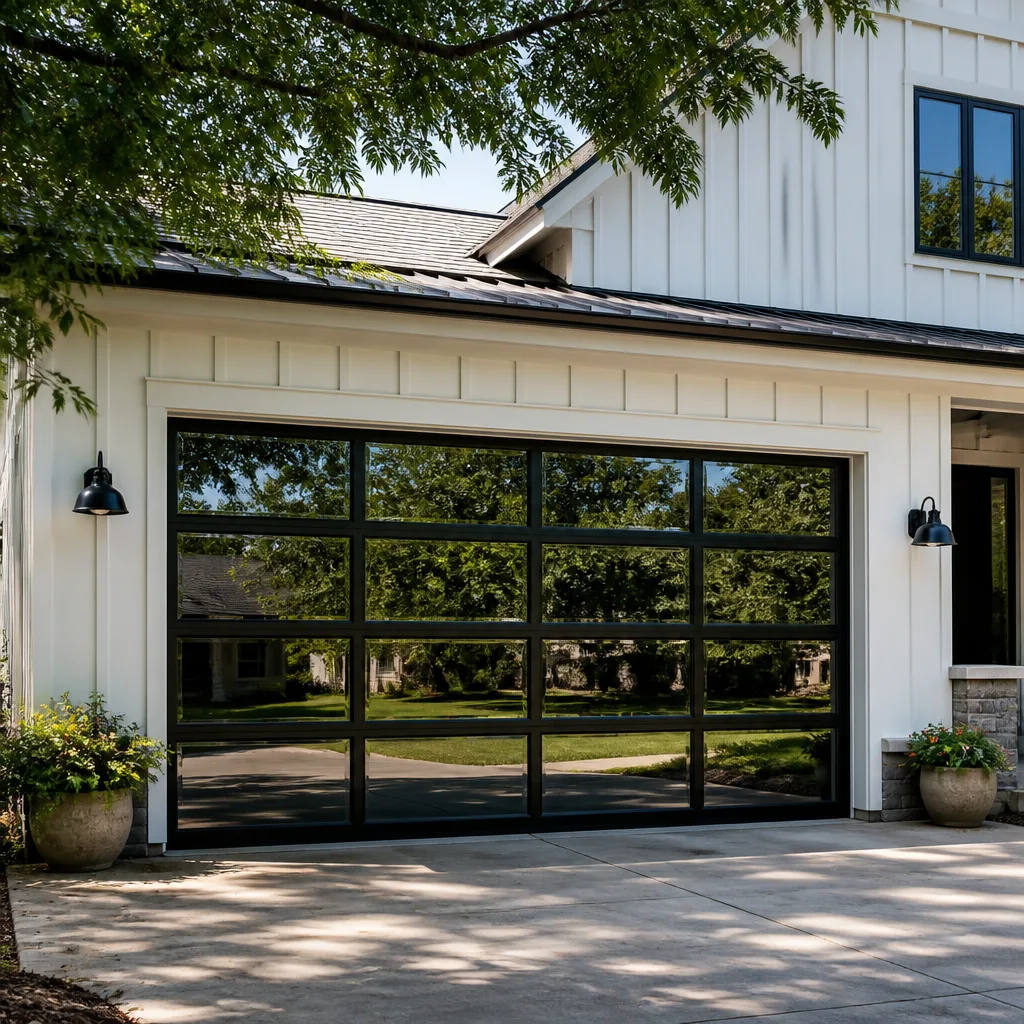 Full-view glass
 LiftMaster openers
 Chamberlain openers
Full 25-point door and opener safety check with every visit - springs, cables, rollers, tracks, and your LiftMaster or Chamberlain opener included
You get a price before we start. It does not change when the truck arrives.
Get your free estimateGarage Door Emergency Preparedness Guide for Willow Glen Homes
During a PG&E outage, a surprising number of Willow Glen homeowners discover they don’t know where the manual release cord is – or that pulling it wrong with a broken spring can drop the door instantly. A garage door weighs between 150 and 400 pounds depending on the material, and when the spring system that counterbalances that weight fails, the door becomes a falling object, not a convenience. This guide covers what actually happens during the five most common garage door emergencies in Willow Glen, what you can safely do yourself in the first ten minutes, and what you shouldn’t touch until a specialist arrives. For more detailed help, see our Garage Door Repair Troubleshooting: Common Problems and How to Fix Them. By the time you finish reading, you’ll have a working emergency plan specific to your door type, your opener, and the realities of Willow Glen’s older housing stock.
Quick Answer
A garage door emergency in Willow Glen – whether it’s a snapped spring, a power outage, or an impact that knocks the door off its tracks – comes down to three priorities: get people and vehicles safe, secure the home, and get the right help. Most homeowners can safely handle the manual release cord and basic door securing, but spring failures and track damage require a trained technician because the stored tension in those components can cause serious injury. Call (877) 265-9458 for a free estimate if you’re unsure whether your door is safe to operate.
Styles & brands we work with
- Raised-panel steel
- Carriage house
- Modern flush
- Full-view glass
- LiftMaster openers
- Chamberlain openers
Table of Contents
- How to Use the Manual Release Cord Safely (Torsion vs. Extension Springs)
- How to Secure a Garage Door That Won’t Close
- What to Do When a Vehicle Is Trapped Inside by a Failed Spring
- Power Outage Preparedness: Battery Backups and Manual Operation
- Post-Impact Assessment: Structural vs. Cosmetic Damage After a Hit
- Willow Glen-Specific Factors: Older Homes, Climate, and Door Types
- Preventive Steps That Reduce Emergency Risk
- Common Mistakes to Avoid
- When to Call a Professional
- Frequently Asked Questions
How to Use the Manual Release Cord Safely (Torsion vs. Extension Springs)
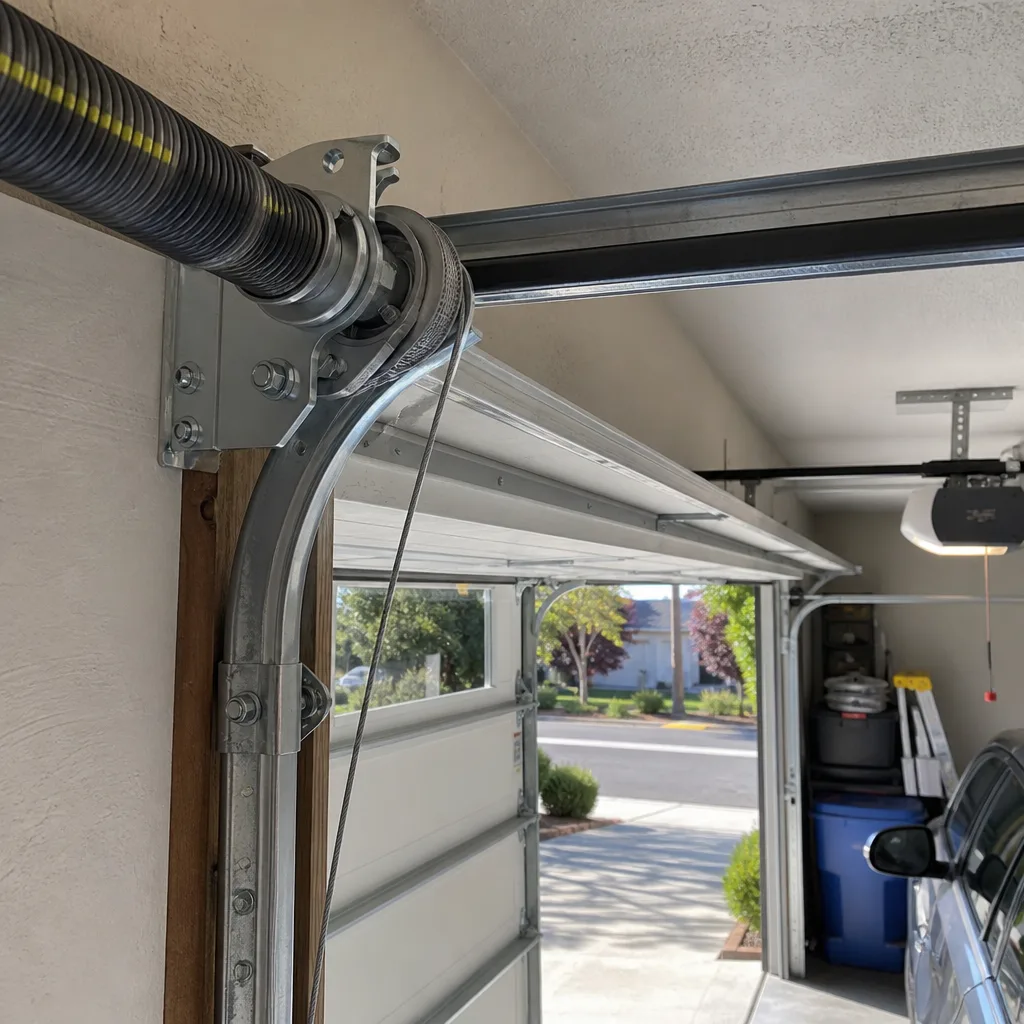
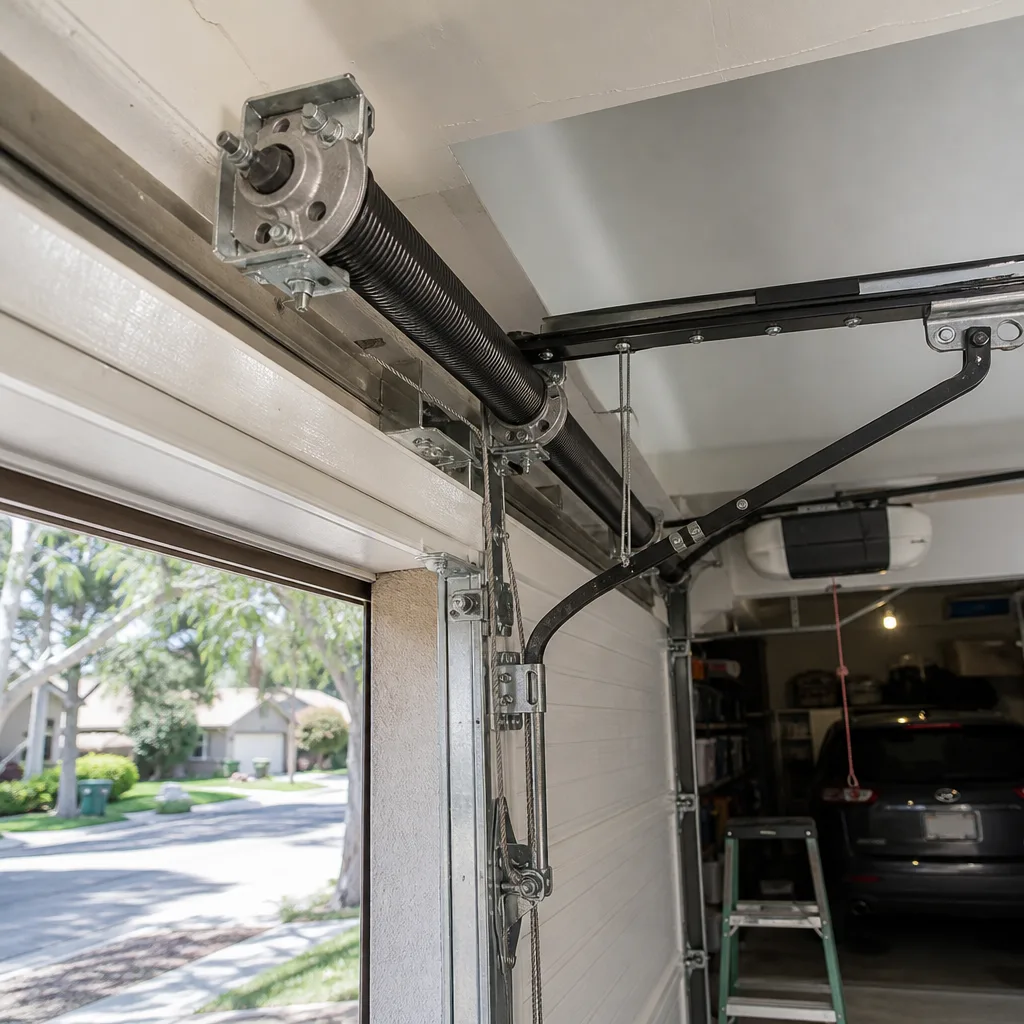
The red cord hanging from your opener rail is the manual release mechanism, and knowing how to use it correctly depends on what kind of spring system your door has. In Willow Glen, where many homes were built between the 1940s and 1970s, you’ll find both torsion springs (mounted on a metal tube above the door opening) and extension springs (mounted on tracks along the ceiling, stretching from the front to the back of the garage). The difference matters because the release procedure changes depending on which one you have, and the safety check before you pull the cord is not optional.
The Critical Safety Check Before Pulling the Cord
Before you touch the manual release cord, look at the springs. If you see a visible gap in a torsion spring – a break point where the coil has separated into two pieces – that spring is no longer holding tension. Pulling the release cord in that condition disconnects the door from the opener, and nothing is counterbalancing the door’s weight. The door can slam down with enough force to crush whatever is underneath it, including a person. The same applies to extension springs: if one side of an extension spring pair has snapped, the door is unbalanced and the release cord will transfer the full remaining weight to you.
Here’s the rule: if you can see a broken spring, do not pull the release cord unless the door is fully closed. If the door is open and a spring is visibly broken, leave it alone and call a professional immediately. The door is being held up by the opener’s motor or the remaining spring, and that’s a temporary condition you shouldn’t test.
Torsion Spring Doors: The Procedure
- Confirm the door is fully closed. If it’s open, visually check both torsion springs for breaks before proceeding.
- Locate the red release cord hanging from the opener trolley. It typically dangles about 6 feet from the floor, within reach.
- Pull the cord straight down and slightly toward the door. You’ll hear a click as the trolley disengages from the opener carriage.
- Lift the door by hand using the handle or the bottom edge. A properly balanced door should lift smoothly with about 10 to 15 pounds of effort and stay in place when you let go at the halfway point.
- If the door feels heavy, drifts downward on its own, or won’t stay up at the halfway mark, the springs are worn or broken. Lower it carefully and call for service.
Extension Spring Doors: The Procedure
- Same first step: confirm the door is fully closed, then visually check both extension springs and their safety cables.
- Pull the red release cord the same way – down and toward the door – until you hear the click.
- Lift the door slowly and pay attention to whether it lists to one side. Extension springs work in pairs, and if one has lost tension, the door will feel heavier on one side.
- A door that won’t stay open, or one that slams shut when released, indicates spring failure. Lower it fully and call a technician.
One more note for Willow Glen homeowners: many older homes in the area have had springs replaced at different times, meaning you might have a mismatched pair. If you notice the door has always felt slightly off-balance, that’s worth addressing before an emergency makes it worse. Our Garage Door Repair Maintenance Checklist for Willow Glen Homeowners can help you spot these issues early.
How to Secure a Garage Door That Won’t Close
A garage door that refuses to close creates a security problem: your home now has a large opening that anyone can walk through. This happens after mechanical failures, electrical problems, or sensor misalignment, and it’s more common in Willow Glen than most people realize because many garages here connect directly to the house. Securing the door doesn’t require parts you don’t have – it requires knowing what you do have and using it correctly.
Method 1: C-Clamp or Vise Grip on the Track
If the door is open and won’t close, place a C-clamp or locking pliers on the track just below one of the rollers. This physically prevents the door from moving downward, which keeps the opening secured. The clamp should be tight enough that it won’t slide, and you should place it on both tracks if you have two clamps. This is a temporary measure, but it works.
Method 2: Disengage and Lower Manually
If the opener is the problem but the springs are intact, pull the manual release cord and lower the door by hand. A properly balanced door will lower in a controlled way. Once it’s down, you can slide a bolt or heavy-duty padlock through one of the track holes (many Willow Glen garage doors have track holes at about knee height) to prevent the door from being lifted from outside. You can also secure the emergency release cord itself by zip-tying the release mechanism shut, which prevents a thief from using a coat hanger through the top of the door to pull the cord.
Method 3: For Doors Stuck Halfway Down
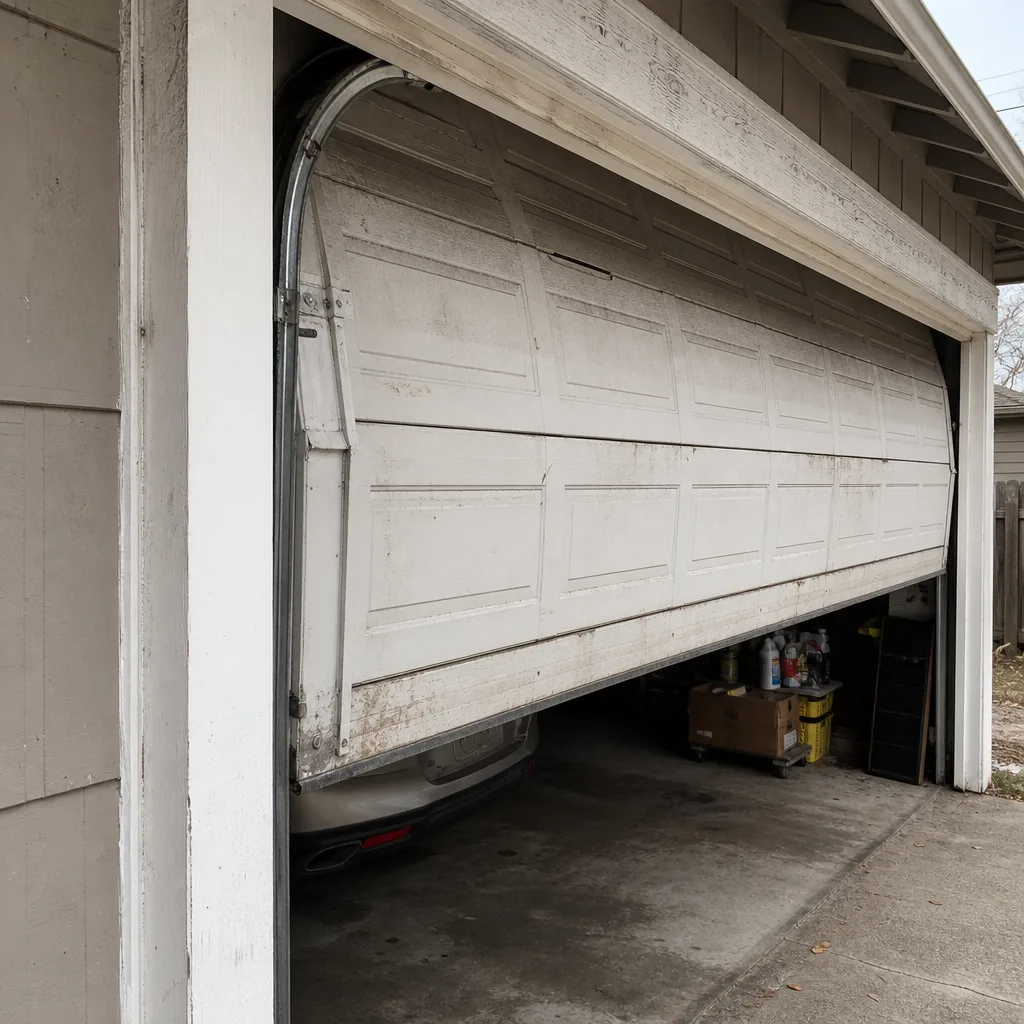
If the door stopped partway due to a broken spring, do not try to force it down or up. A door in this state has uneven weight distribution, and forcing it can pull the door off its tracks. Instead, secure the area: block the opening if you can (a vehicle parked against it on the inside helps), and call for emergency service. If you need to leave the house, close the interior door between the garage and the home and lock it. Treat the garage itself as unsecured.
We’ve worked on garage doors across Willow Glen from Bird Avenue to the Cambrian border, and the security concern is consistent: a garage that’s visibly open advertises the condition of your home. Even a temporary securing method is better than leaving the door open while you wait for service.
Parts to Keep on Hand
- Two C-clamps or locking pliers sized to fit your track (about 2 inches of opening)
- A heavy-duty padlock or a spare track bolt
- Zip ties for the emergency release
- A flashlight with working batteries (the corner of a dark garage is no place to be fumbling)
What to Do When a Vehicle Is Trapped Inside by a Failed Spring
This is the scenario that creates the most panic: you need to get to work, the door won’t open, and the car is inside. In Willow Glen’s older homes, where many garages are narrow and the door is the only vehicle exit, a failed spring means the car isn’t going anywhere until the door opens safely. Here’s the sequence that actually works, from the safe workaround to the moves you should never attempt.
The Safe Workaround
- Check the spring visually. If the torsion spring above the door has a visible break, or if one extension spring is hanging loose, that’s your answer.
- Do not attempt to use the opener. The motor will strain against the unbalanced door, and repeated attempts can burn out the opener, adding a second problem to the first.
- If at least one person is available to help, you can manually lift the door together – one person on each side, lifting from the bottom edge. A door with one broken spring might be liftable by two people, but it’s important to think through this carefully: a door that weighs 200 pounds with working springs can feel like 150 pounds of dead weight with one broken spring. Two adults can usually manage that, but only if both can lift from the bottom.
- Lift the door all the way up and use C-clamps on the tracks to hold it there. Do not rely on the door staying open on its own.
- Back the vehicle out carefully. Do not let anyone stand under the door while the vehicle is moving.
The Moves That Risk Door Collapse
- Pulling the emergency release when the door is closed and a spring is broken: the door becomes 150 to 400 pounds of uncontrolled weight.
- Using the opener to force the door up: you’re asking a 1/2-horsepower motor to overcome a broken spring’s absence. Sometimes it works once. Sometimes it breaks the opener and the door falls back down.
- Having one person lift the door alone from its center: an unbalanced door will tip and bind on one side, and the person holding it can be caught underneath.
- Blocking the door open with a broomstick, shovel, or lumber: these aren’t rated for garage door weight and will snap when the door shifts.
In our experience, two situations account for nearly every trapped-vehicle call we get in Willow Glen: torsion spring breaks in doors that are 10 to 15 years old, and extension spring failures in homes where the original safety cables were never installed. Both are diagnosable from a photo, so if you’re unsure whether it’s safe to lift the door manually, take a picture of the springs and text it to a professional before you try anything.
Power Outage Preparedness: Battery Backups and Manual Operation
Willow Glen loses power during PG&E public safety shutoffs and storm events, and every time it happens, garages across the neighborhood go quiet. The most frustrating version of this is when the power is out, the car is inside, and the opener won’t respond because it has no power. Here’s what to do before, during, and after an outage.
Before the Outage: What to Know
- Locate your manual release cord now, not when the power is out. It’s the red cord hanging from the opener rail. In a dark garage, you’ll want to find it by feel, and that only works if you’ve practiced.
- Check if your opener has a battery backup. Chamberlain and Genie both make openers with built-in battery backup units that will operate the door 20 to 50 times during an outage. If you have one of these, test the battery annually by unplugging the opener and running the door.
- If your opener doesn’t have a battery backup, know that you’ll be operating the door manually. That means knowing whether your door is balanced (see the manual release section above).
During the Outage
- Decide whether you actually need to open the garage door. If you don’t need to move the car, leave the door closed. Manual operation is safest when the door is closed.
- If you need to open the door, use the manual release cord. Pull it down and toward the door, then lift the door by hand. A balanced door will open with modest effort.
- If you’re leaving the house during an outage, know that the opener won’t close the door for you. You’ll be closing it manually when you return, and you’ll need to disengage the opener from the door (pull the release cord) and re-engage it when you get back by pulling the cord again and running the opener once to reconnect.
- Secure the door when it’s closed. Without power, the opener’s automatic locking function (if it has one) is inactive. Use a padlock or track clamp if you’re worried about security during the outage.
The Chamberlain and Genie Battery Backup Difference
If your opener was installed in the last 5 to 7 years and it’s a Chamberlain or Genie unit, it may have battery backup already built in. Chamberlain’s models with battery backup include a battery compartment on the motor unit, and Genie’s have a distinct battery housing. If you have one of these openers and it stopped working during an outage, the battery may be depleted or failed. Battery replacement is a straightforward service call, and it’s worth doing before the next outage season.
For Willow Glen homeowners without battery backup, there’s no overnight retrofit that’s safe to DIY. Aftermarket battery backup kits exist, but they aren’t compatible with every opener, and wiring one into a unit that wasn’t designed for it can void the opener’s safety certification. If this is on your mind, the conversation starts with what opener you have and what your outage frequency actually looks like.
Post-Impact Assessment: Structural vs. Cosmetic Damage After a Hit
Whether it’s a car bumper, a bike, or a delivery that catches the bottom panel, impacts happen. The question that matters is whether the door is safe to operate after impact, and the answer isn’t always obvious. Here’s the assessment we use when we get post-impact calls in Willow Glen, and the same framework you can use at home.
Cosmetic Damage: Usually Safe to Operate
- Scratches, scrapes, and paint transfer on the panel face
- Small dents (under 2 inches) in the panel that don’t affect the panel’s edge or the hinge line
- Bent weatherstripping at the bottom of the door
- Aesthetic damage to trim or molding around the opening
If the damage is limited to these, the door will likely operate normally. You can close it and continue using the opener. Cosmetic repair on a steel Clopay or Amarr panel is often straightforward, and depending on the door’s age, replacement panels are available for most models.
Structural Damage: Do Not Operate
- Any bend or crease along the panel’s top or bottom edge where hinges attach
- A panel that has separated from its hinge or end stile
- Visible bowing or change in the panel’s shape that affects how it sits in the track
- Damage to the vertical or horizontal track itself, including a track that’s been knocked out of alignment
- Any damage to the spring, cable, or cable drum
- The door feels different – heavier, louder, or it hangs at an angle when partially open
If you see any of these, disengage the opener and don’t operate the door manually either. A door with structural damage can bind on the tracks and come off the track entirely, which turns a $200 panel repair into a $1,200 plus track replacement.
The Specifics That Matter for Willow Glen Homes
Many Willow Glen garages have vintage wooden doors or original steel doors from the 1960s and 1970s. These doors are heavier than modern equivalents, and the panels often have internal wood framing that isn’t visible from the outside. An impact that causes a cosmetic dent on the surface can hide cracked internal framing. If your door is original to the home and takes a hit, it’s worth having the panel inspected before the next time the door cycles.
Willow Glen-Specific Factors: Older Homes, Climate, and Door Types
Willow Glen’s housing stock creates a particular pattern of garage door emergencies that differs from newer developments in San Jose or Campbell. The neighborhood’s original homes, many built between the 1930s and 1960s, have garages that were designed for smaller cars and different door technology. Understanding those differences helps you anticipate what might fail.
Older Door Systems and Parts Availability
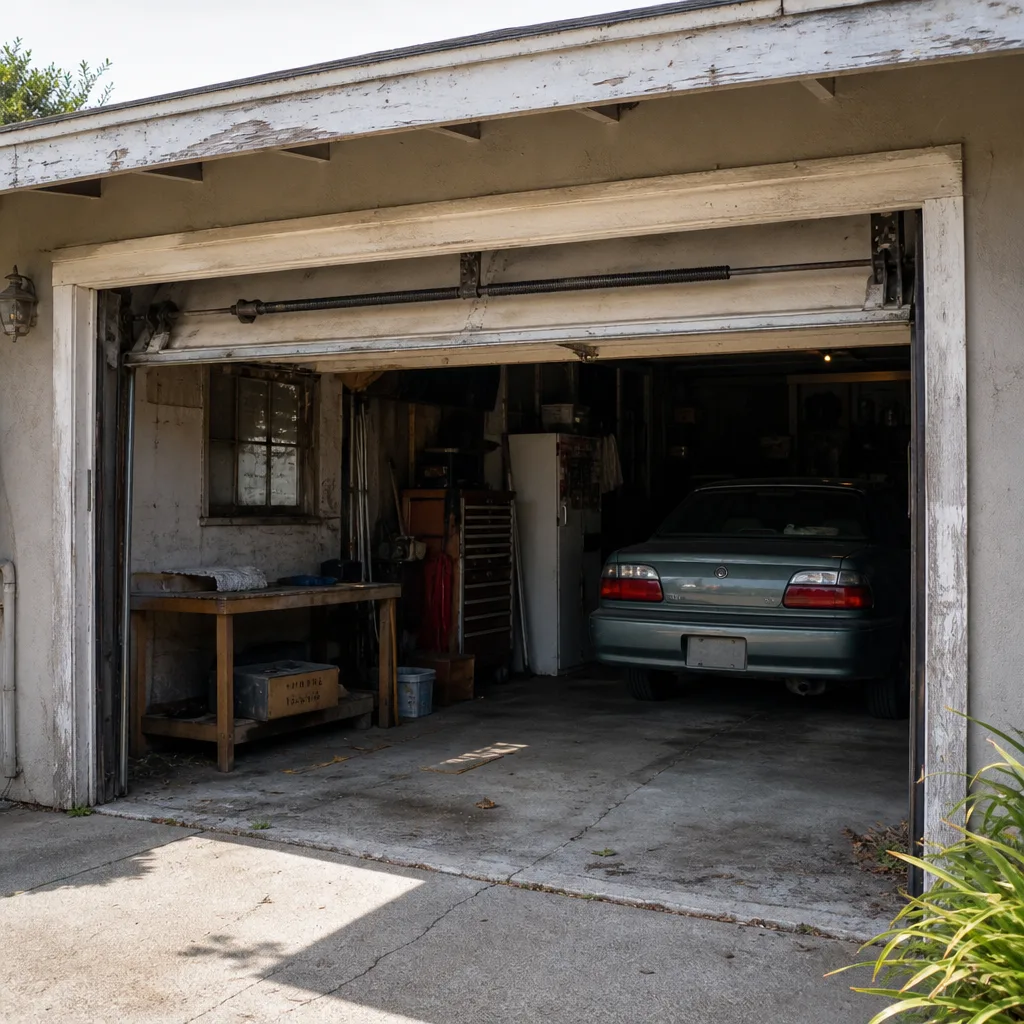
Doors original to Willow Glen homes often use extension spring systems rather than torsion spring systems. Extension springs were standard on residential garage doors until the 1970s and 1980s, when torsion spring designs became more common. Extension springs fail at a predictable rate – typically 7 to 10 years – and when they fail, the safety cable (if present) is what prevents the spring from becoming a projectile. Many original Willow Glen doors either predate safety cable requirements or had cables added as retrofits with varying quality. If your door has extension springs without safety cables running through the spring center, that’s a repair priority before it becomes an emergency.
Climate and Material Behavior
Willow Glen’s climate – wet winters, dry summers, and coastal-influenced humidity shifts – affects garage door components in ways that matter. Wooden doors swell during winter rains and can bind against their frames, which creates resistance that wears out openers prematurely. Steel doors in Willow Glen’s dry summers expand slightly with heat, and if track spacing isn’t correct, this makes the door run loud and rough. Amarr and Clopay steel doors are built for these conditions with paint systems designed for marine environments, but even the best steel door will misbehave if the tracks were never adjusted for the home’s specific temperature swings.
Narrow Garages and Door Size Constraints
A significant share of original Willow Glen garages are narrower than modern standards. Doors that are 8 feet wide rather than 9 or 10 feet create a particular frustration: replacement panels and certain opener models are harder to source for 8-foot doors, and many older 8-foot doors are one-piece tilt-up designs rather than sectional doors. Tilt-up doors operate on entirely different physics – they swing outward and up, and their spring systems don’t match sectional door components. If you have a tilt-up door and it fails, standard sectional door parts won’t fit, and you’ll need a technician who recognizes the difference.
Preventive Steps That Reduce Emergency Risk
The most effective emergency preparedness is the kind that makes the emergency less likely. Here’s what we recommend for Willow Glen homeowners who want to reduce the odds of a surprise door failure, plus more guides & resources to keep your door running smoothly.
Monthly Visual Inspection
- Look at both springs. With the door closed, check for gaps, rust, or separation in torsion springs; for extension springs, check for stretched coils or missing safety cables.
- Watch the door cycle once. It should move smoothly without jerking, loud pops, or uneven movement from side to side.
- Test the balance. Disengage the opener (pull the release cord) and lift the door manually. It should stay at the halfway point. If it drifts down, the springs are wearing out.
- Check cables. Look for fraying near the cable drums and at the bottom brackets.
Annual Opener Maintenance
- Test the auto-reverse safety sensors. Place a 2×4 or a roll of paper towels in the door’s path and close the door. The door should reverse when it contacts the object.
- If you have a battery backup opener from Chamberlain or Genie, unplug it and cycle it once or twice to confirm the battery still holds charge.
- Check the opener’s force settings. If you’ve noticed the opener starting to strain, the springs may be due for replacement, and adjusting force settings is the wrong solution.
When Parts Hit Their Typical Lifespan, Replace Before They Break
- Torsion springs: 10,000 cycles is the standard rating, which translates to about 7 to 9 years for most Willow Glen homeowners who open and close the door 3 to 4 times a day. Everyday use tracks toward the shorter end of that range.
- Extension springs: 7 to 10 years, and they usually show signs (stretching, gaps in coils) before they fail completely.
- Rollers: nylon rollers last 10 to 15 years. Steel rollers with bearings can go 15 to 20. Original steel rollers from the 1960s are often 60 years old and make noise that suggests replacement.
- Cables: inspect annually; replace at first sign of fraying regardless of age.
Granite Garage Door Repair works on all of these components across Clopay, Amarr, and other major brands. If you’re not sure what to look for during an inspection, our Garage Door Repair in Willow Glen service includes a full component check with every repair visit.
Common Mistakes to Avoid
- Pulling the manual release with the door open and a broken spring. This converts a spring failure into a free-falling door. Always check the spring condition before touching the release cord.
- Forcing the opener to lift a door that’s clearly struggling. If the door sounds heavy or the opener is laboring, the springs are likely failing. Repeated opener use against a failing spring burns out the opener motor, which means you’ll be replacing both the spring and the opener.
- Spraying lubricant on the spring as a fix for a broken spring. Lubricant prevents squeaking; it doesn’t restore tension. A noisy spring can be lubricated, but a broken spring needs replacement.
- Leaving the garage door open and unsecured while waiting for help. In Willow Glen, where many garages connect to the home, this essentially leaves the house open. Use track clamps or lower the door manually if you can.
- Operating the door after an impact without checking the track alignment. Even a low-speed bump can shift the track enough that the next cycle derails the door. Check before you open or close.
- Ignoring a door that’s slightly unbalanced. A door that closes a little too fast or hangs slightly crooked is telling you something. Springs wear gradually, and the day you finally notice it’s bad is usually the day the spring breaks.
- Using random parts from the hardware store to fix a door that has brand-specific components. Torsion springs, cables, and brackets are sized to the specific door and brand. A generic part that’s “close enough” can cause the door to fail catastrophically.
When to Call a Professional
Call a professional if you see a broken spring, if the door has come off its track, if the cables are frayed or snapped, if the opener is making grinding noises, or if the door has taken an impact and you’re not sure whether it’s safe to operate. These are not conditions where trial and error produces a good outcome. A garage door under spring tension stores enough energy to cause serious injury to anyone working on it without the right training and tools.
Granite Garage Door Repair offers free estimates in Willow Glen – call (877) 265-9458 and describe what you’re seeing. We work on garage door openers in Willow Glen as well as the full mechanical door system, so one call covers the whole problem. If you need a new garage door installed in Willow Glen, we’ll tell you honestly whether replacement makes more sense than repair.
Frequently Asked Questions
Do not touch the manual release cord. The first step is to visually confirm the spring break, then secure the area by placing C-clamps on the tracks if you have them. Call a professional before attempting to move the door. If you need to use the garage as an exit, block the opening from the inside and keep the interior door locked.
Yes, if the springs are intact. Pull the red manual release cord and lift the door by hand. A balanced door should lift with 10 to 15 pounds of effort and stay open on its own. If the door feels heavy or won’t stay up, the springs are worn or broken, and you should not continue trying to operate it manually.
Emergency garage door repair in Willow Glen typically runs between $150 and $450 depending on the component that failed. Spring replacement usually falls in the $180 to $340 range for a single spring, while cable replacements typically run $120 to $220. Exact pricing depends on your door’s brand, size, and whether additional components need replacement. Call (877) 265-9458 for an exact quote – estimates are free.
Same-day emergency service is available in Willow Glen for spring failures, cable breaks, and doors that are stuck open. The price is quoted and agreed before any work starts, so there are no surprises on the invoice. Call (877) 265-9458 as soon as you know you need help, and we’ll get you on the schedule.
No. The price is quoted upfront based on what you describe, and it’s confirmed before any work begins. If the technician discovers additional problems during the repair, you’ll be told what they are and what they cost before anything extra is done. You’ll never receive a bill that’s different from what you approved.
We service openers from all major manufacturers, including LiftMaster, Chamberlain, Genie, Craftsman, and Raynor. That includes modern Wi-Fi-connected units like Chamberlain myQ and Genie Aladdin systems, which require specific diagnostic knowledge that general repair crews often don’t have. If you know your opener’s brand when you call, it helps us bring the right parts on the first trip.
The Bottom Line
A garage door emergency in Willow Glen is manageable if you know three things: where your manual release cord is, whether your springs are in one piece, and when to stop and call for help. Power outages are an inconvenience, but a broken spring is an injury risk, and the difference between those two situations determines what you can safely do yourself. Preventive inspection takes about five minutes a month and catches most failures before they become emergencies. And when you do need a professional, calling one company that handles the door, the opener, and the installation means you won’t be coordinating multiple contractors while your garage sits open. Call (877) 265-9458 for a free estimate, and get the full picture from our Granite Garage Door Repair home page.
Written by the team at Granite Garage Door Repair, serving Willow Glen since 2017.
See the difference
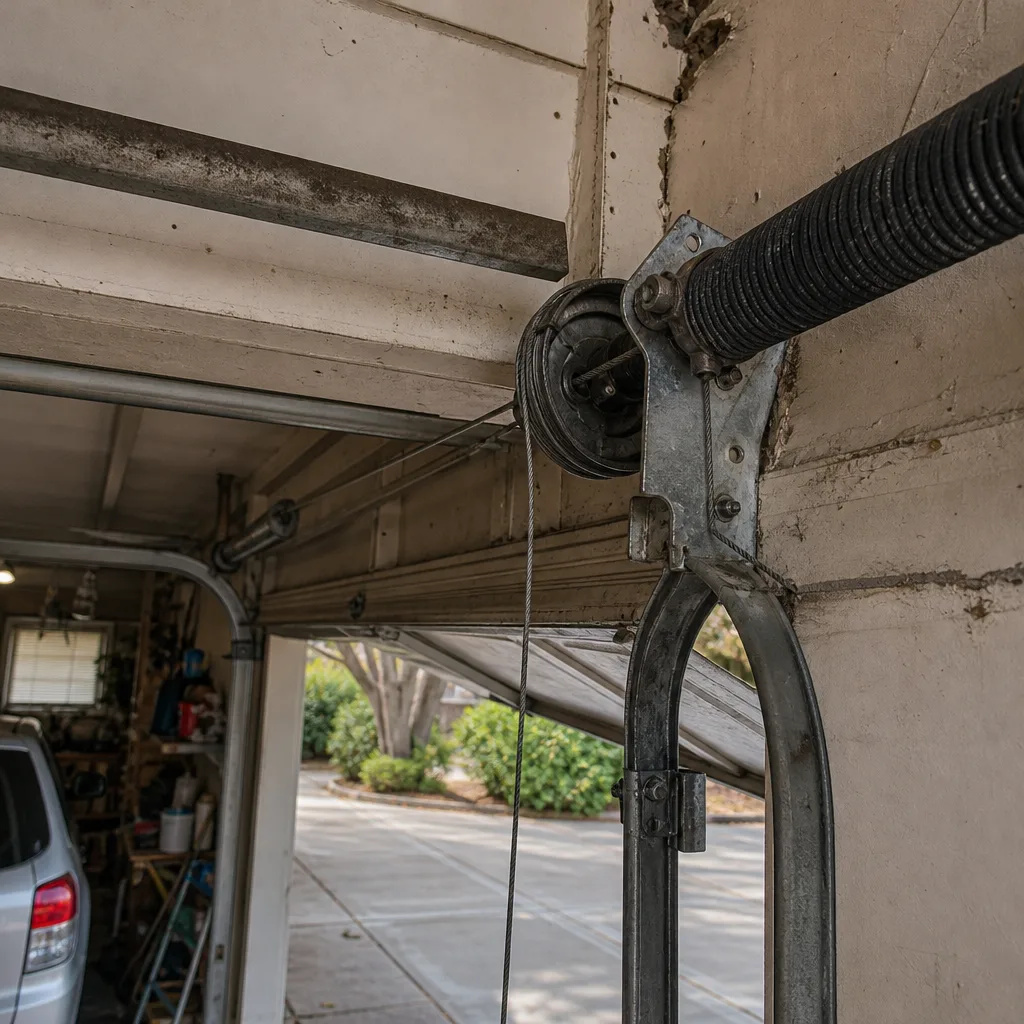 Before
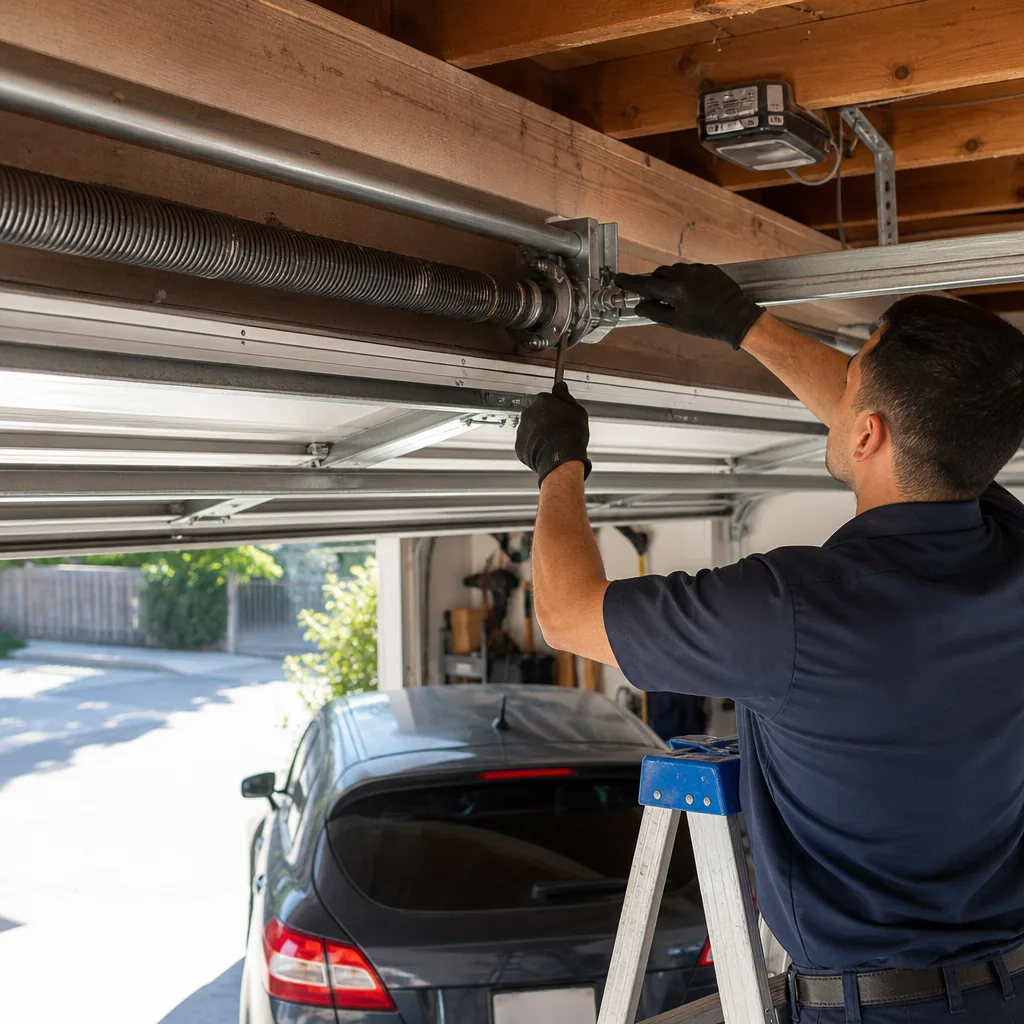 After
 Before
 After
 Before
 After